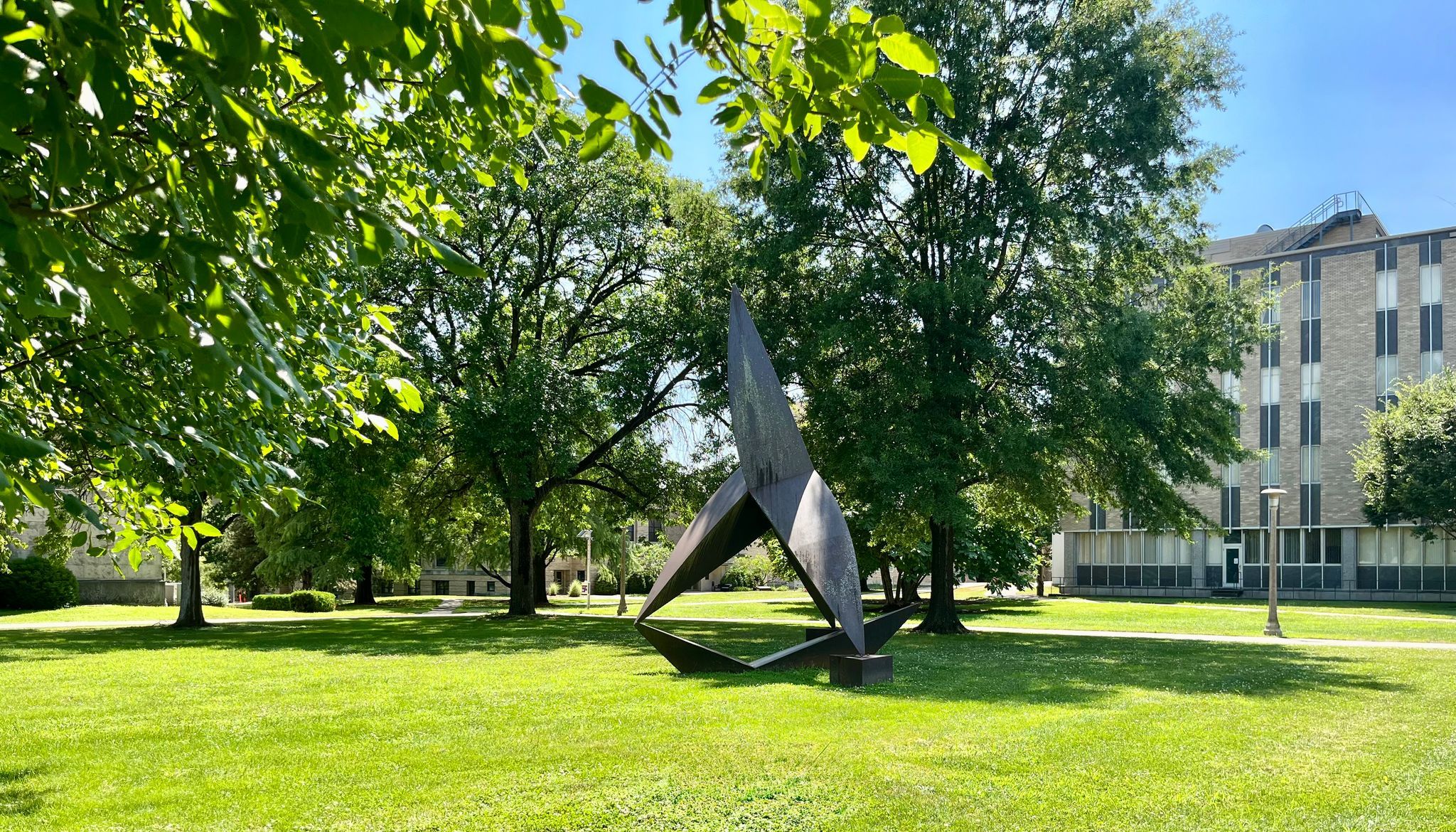
City Sculpture Tour
Macomb's downtown and Western Illinois University campus are home to more than two dozen public sculptures — from a life-size Abraham Lincoln to a giant spinning-dice Monopoly board honoring hometown inventor Lizzie Magie, plus works by nationally recognized artists like Richard Hunt. This self-guided tour connects the permanent collection with the city's ever-changing annual sculpture exhibit.
1. Macombopoly
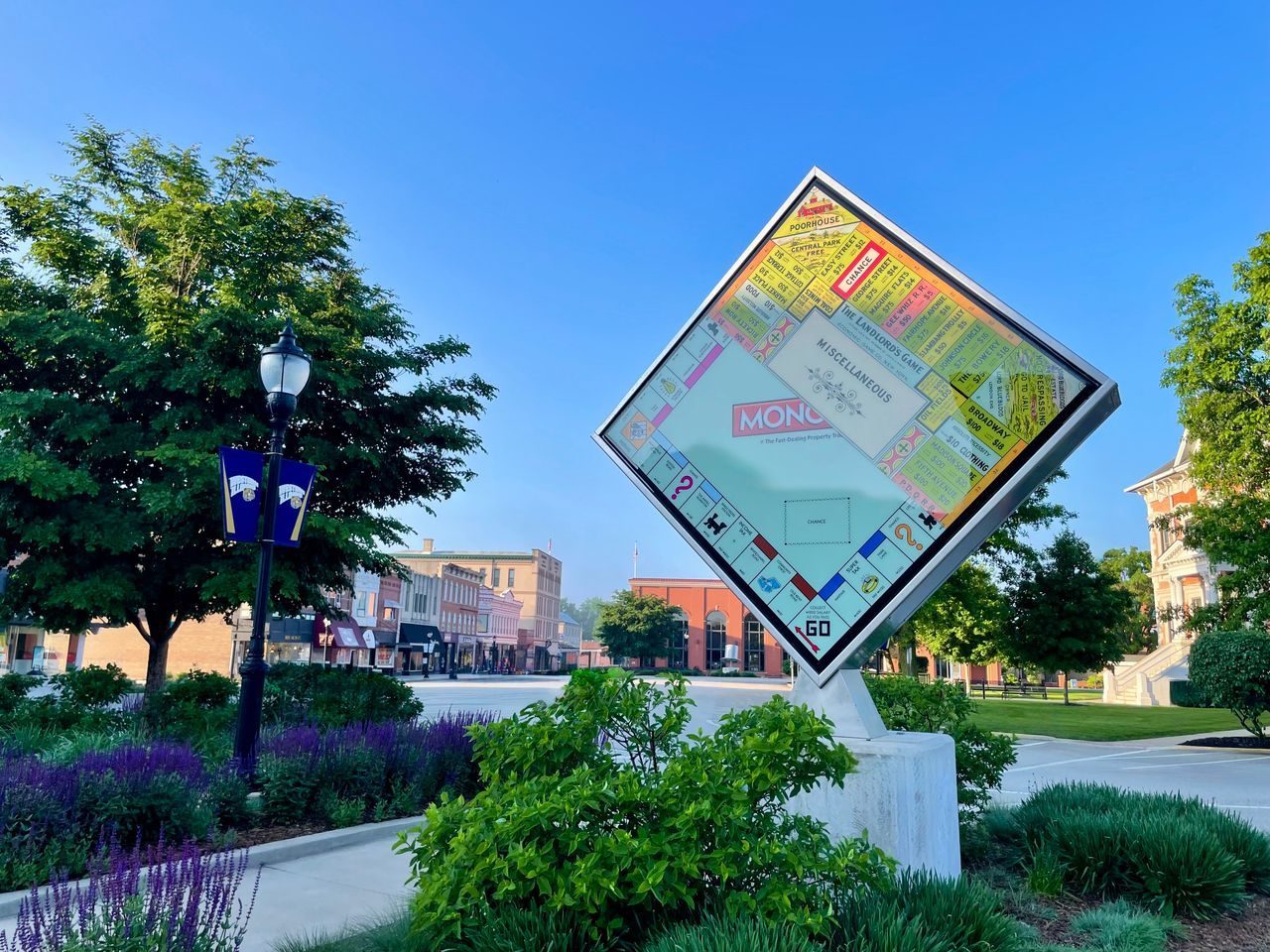
Macombopoly is billed as the world's largest Monopoly-style game board — a 4,000+ sq. ft. real-world board playable via a free app. Each corner of the courthouse lawn holds a large game piece: giant spinning dice, Abraham Lincoln's stovepipe hat, a huge Monopoly/Landlord's Game board, and a life-size sculpture of Lizzie Magie, all by sculptor Gabe Stevens. Magie was born in Macomb in 1866 and is credited with inventing "The Landlord's Game," the direct precursor to Monopoly. A newer addition, a Mr. Monopoly (Uncle Pennybags) sculpture, joined the original five pieces on the square in 2026.
2. Living Lincoln Topiary Monument
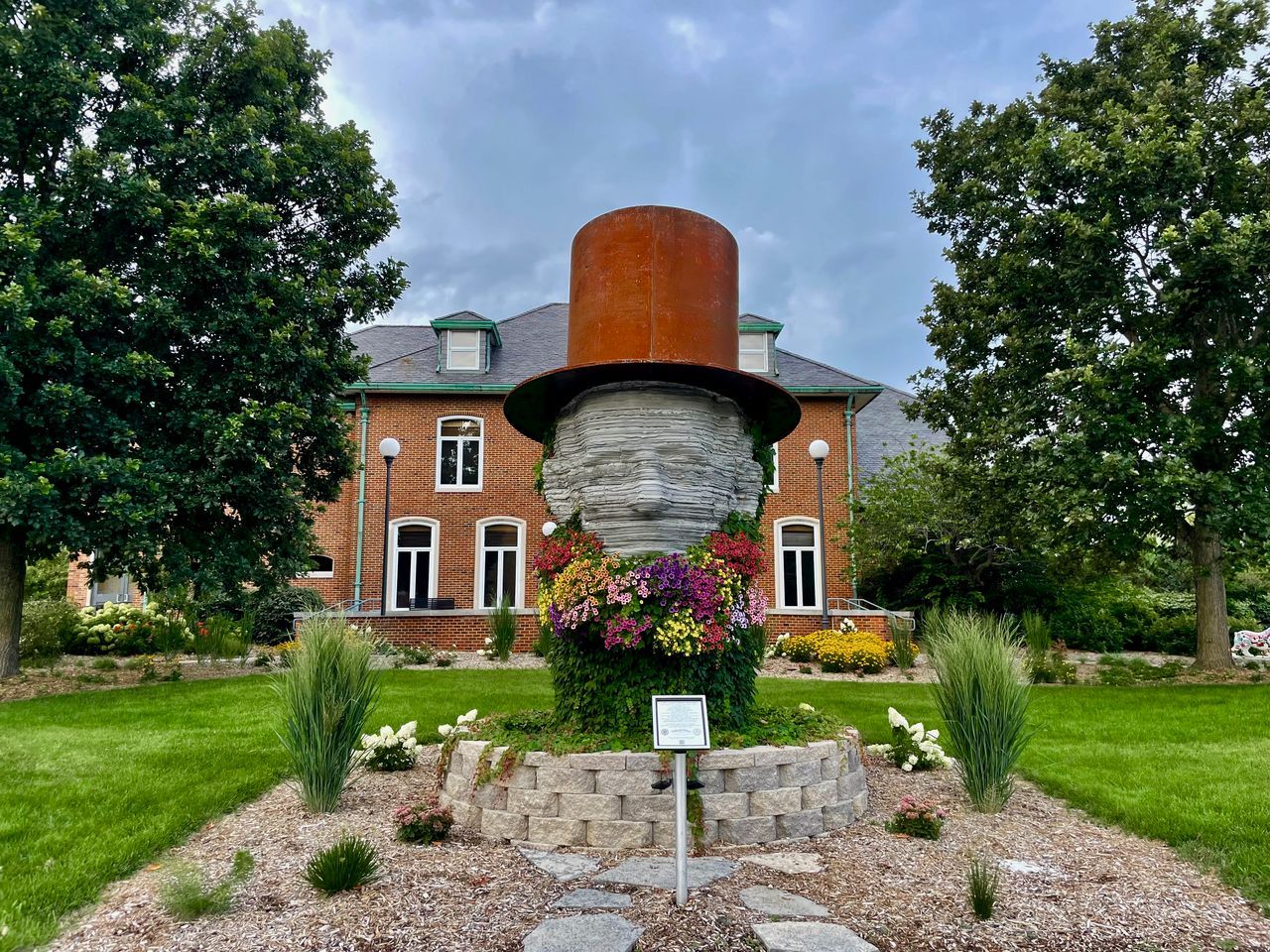
A 16-foot-high, 8-foot-wide bust of Abraham Lincoln built from cast stone and steel, with one unusual feature: the president's beard is made of real, living flowering plants and greenery, making it the only sculpture of its kind in the world. It was conceived by artist and WIU professor, Duke Oursler, created with the help of artist Marc Moulton, and serves as the centerpiece of Unforgettable Forgottonia's "Looking for Lincoln" self-guided tour. The monument was funded by the Macomb Rotary Clubs to mark their 2020 centennial anniversary and dedicated on August 29, 2020.
3. Abraham Lincoln Statue
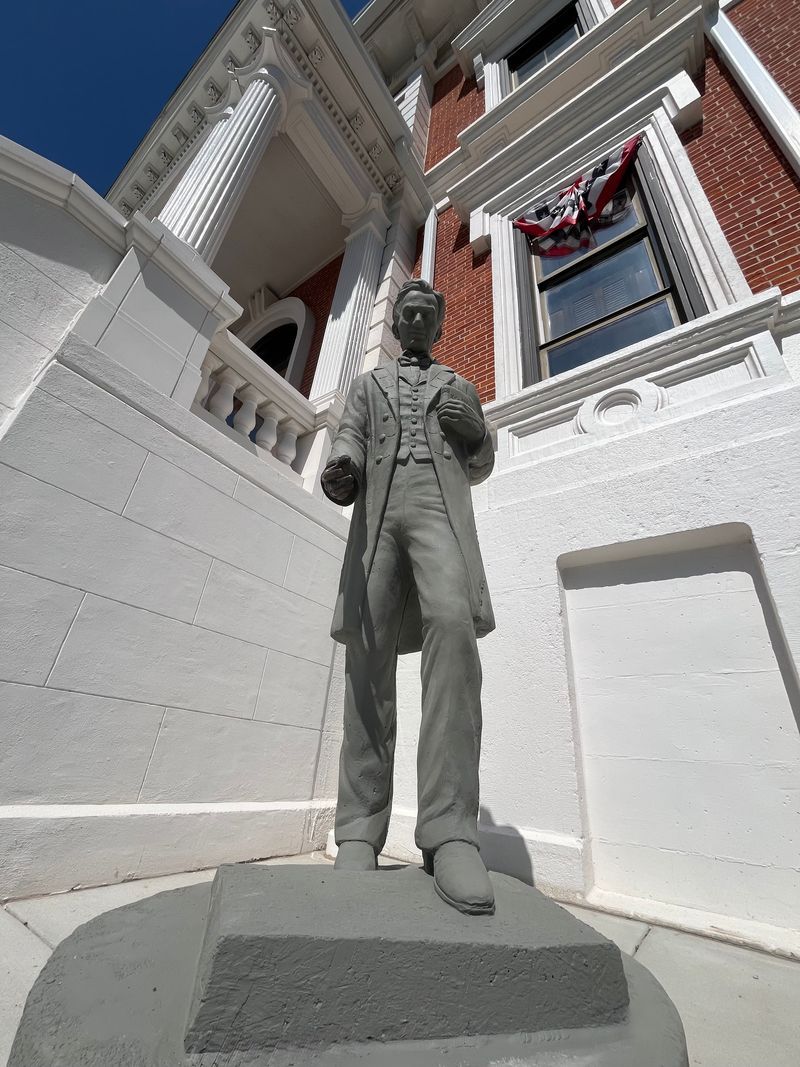
Cast by Duke Oursler (from an existing mold of unknown origin/artist) — on the Southwest side of McDonough County Courthouse, marks the site associated with Lincoln's visits to Macomb during his political career in Illinois.
4. Tractor Town
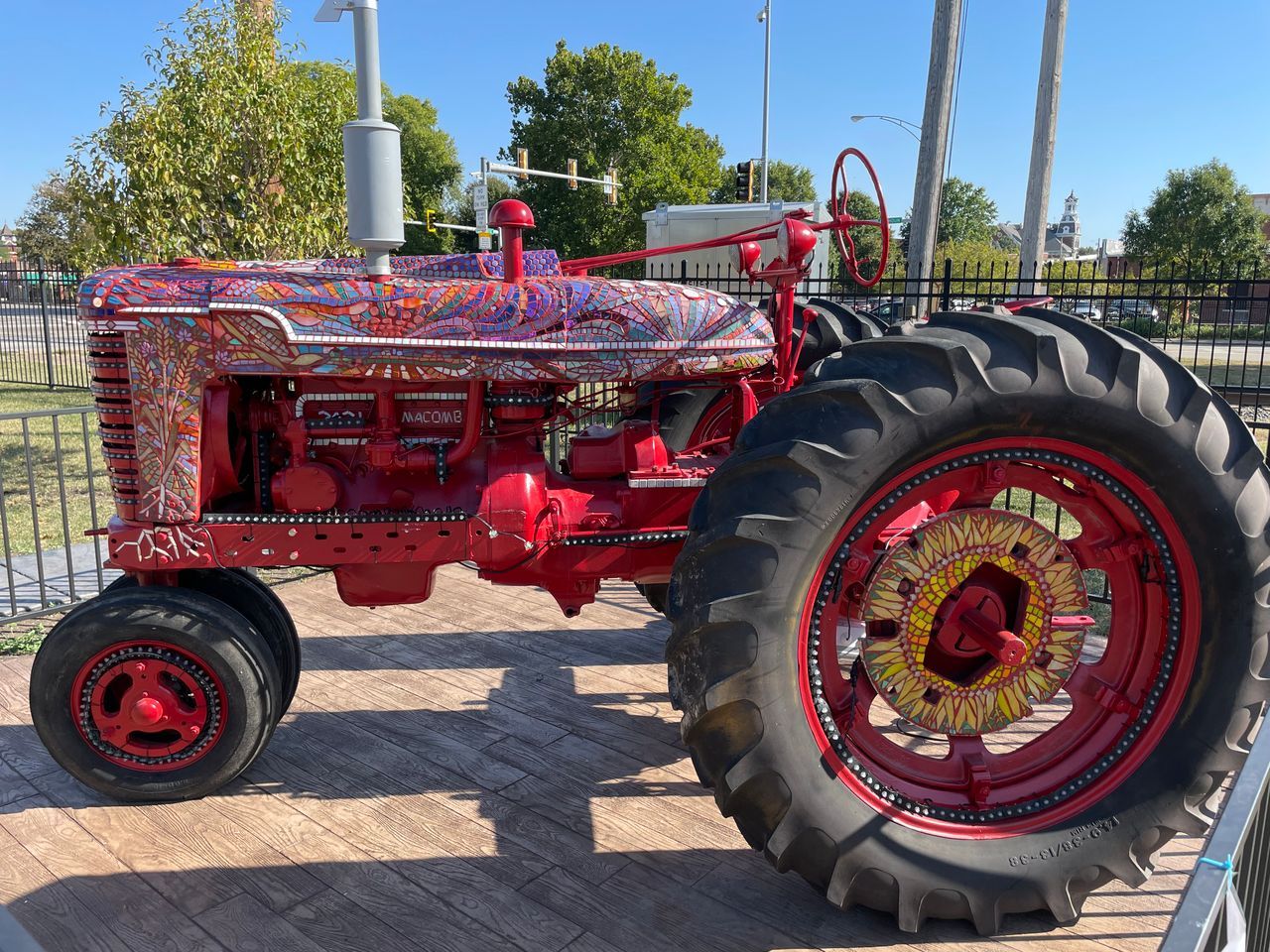
Located in Mummert Pocket Park, next to the Bold Brew House. A vintage Farmall H tractor entirely hand-inlaid with mosaic glass tiles depicting scenes of local farm life, lit at night by hundreds of LED lights. Artist Kelley Quinn started the project after farmer Tim Sullivan was killed in May 2019 when his tractor was struck from behind on Route 67 north of Macomb. It was unveiled September 11, 2021 as part of Macomb's Art, Wind & Fire Festival, and Quinn intends it as the first of what she hopes will become several mosaicked tractors placed around McDonough County to keep rural roadway safety visible.
5. Citizens Plaza interactive sculpture park
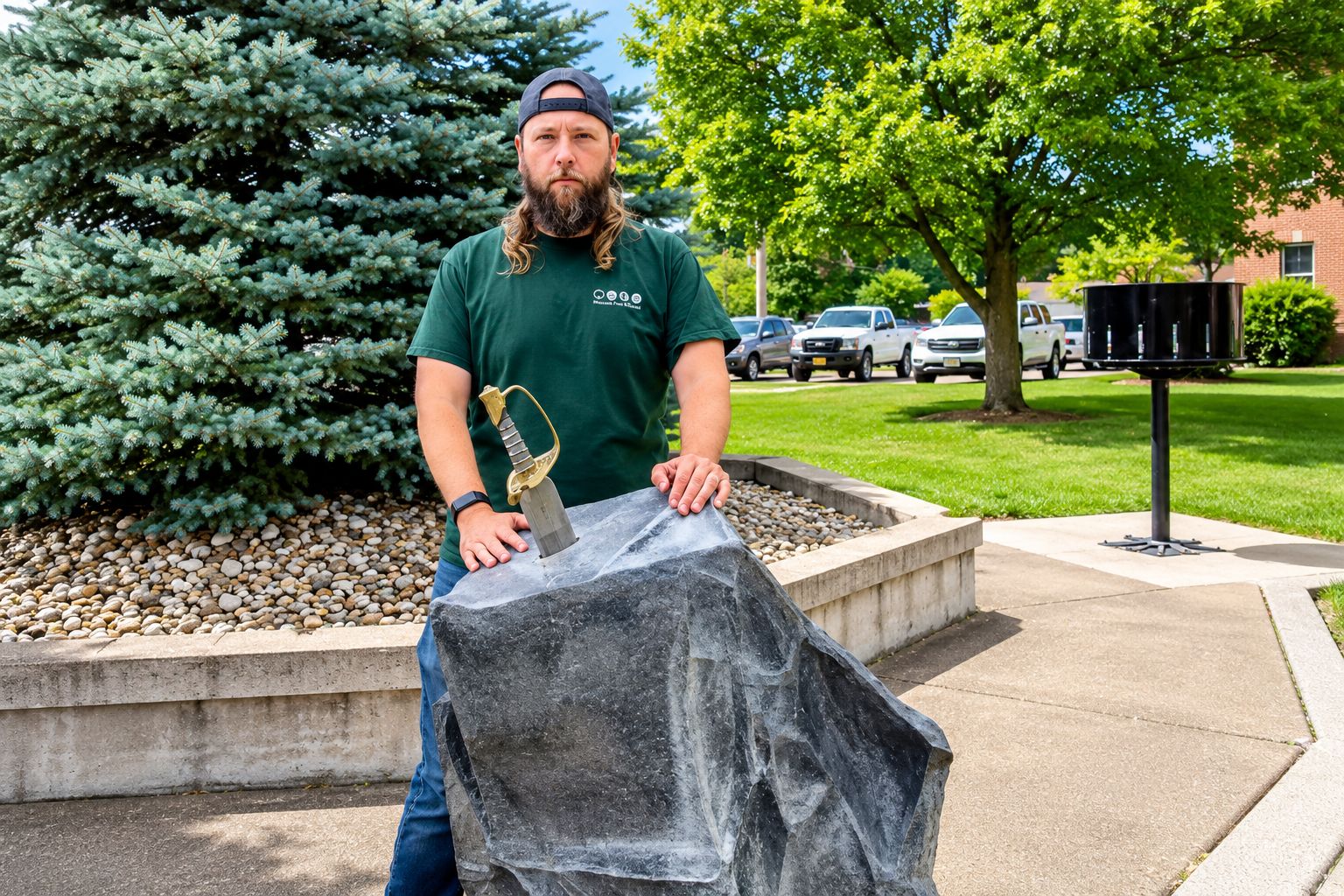
A cluster of interactive pieces in one plaza, including a "Pull the Sword from the Stone" sculpture, a stack of sculpted vases with hidden faces, a spinning zoetrope, and kinetic bird sculptures.
6. Oblique Trajectory with Archimedes Pontoon Structure
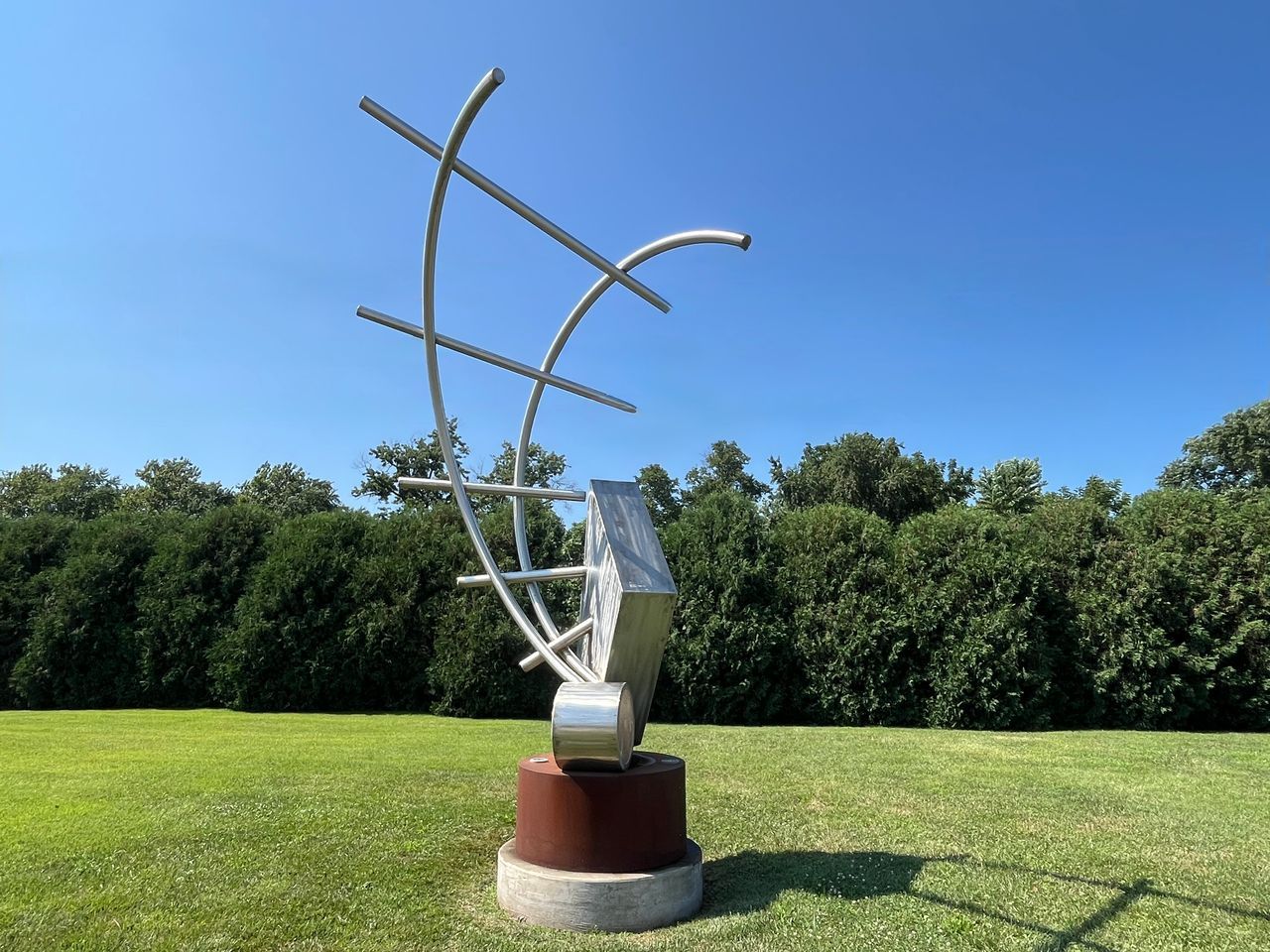
Located one lot west of 600 W. Jackson St. Artist Robert Osborne creates works to challenge the viewer's eyes. The deliberate tilt ("oblique trajectory") is meant to provoke uncertainty, forcing you to look closer and question how a top-heavy framework can securely hold itself up in an open landscape. It shifts the focus from static metal to an energetic demonstration of balance, light, and space.
7. Civil War Soldier Monument
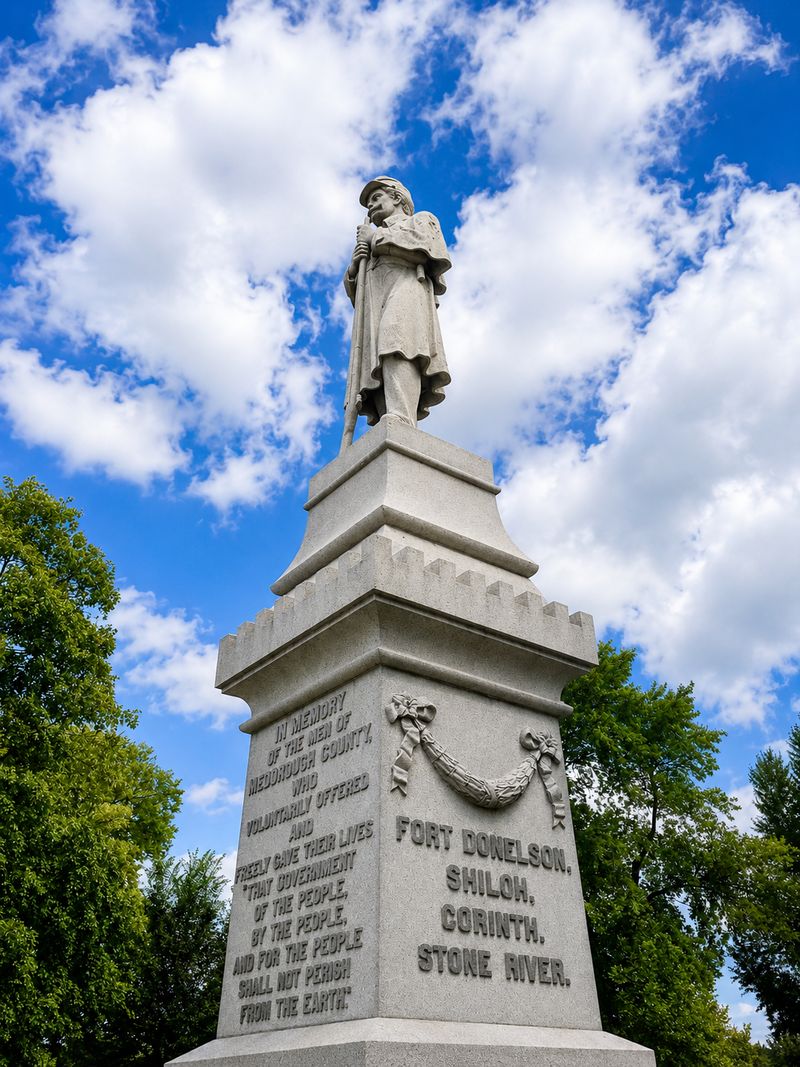
The memorial is located at North Lafayette Street, south of East Calhoun Street (U.S. 67/136), Macomb, IL 61455. It sits on the west side of Chandler Park in Central Illinois. Erected in 1899 by Comrade C.V. Chandler of the 78th Illinois Volunteer Infantry, this granite monument tapers up from a classic stone base to a life-sized carved statue of a Union soldier in uniform, leaning forward with his rifle at rest, flanked by heavy decorative carved garlands. Deeply engraved block lettering on the west face carries a dedication drawn directly from Lincoln's Gettysburg Address. The north and south faces list the major Civil War campaigns McDonough County's volunteer regiments fought and suffered losses in.
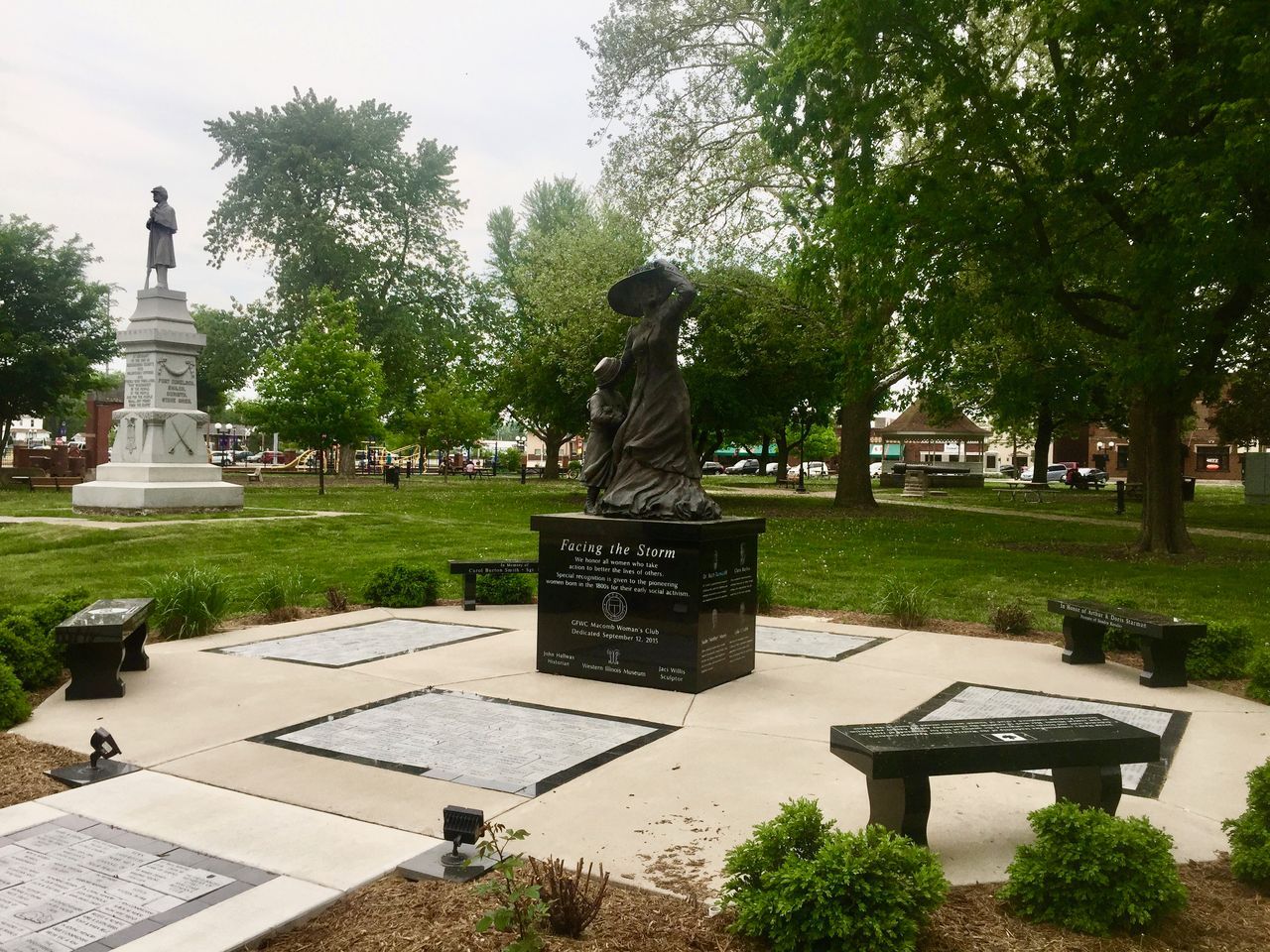
8. Facing the Storm (Suffragette Monument)
Commissioned by the GFWC Macomb Women's Club after a decade of planning and fundraising, this bronze statue depicts a woman standing with a young girl holding a cat, both dressed in early-1900s clothing from the era when women fought for and gained expanded rights. The monument memorializes eight local women who were social activists in Macomb in the early 1900s — physicians, medical researchers, community organizers, and journalists who helped abused women and orphans — with brief biographies of each included at the site. Done by Jaci Willis from Peoria, IL.
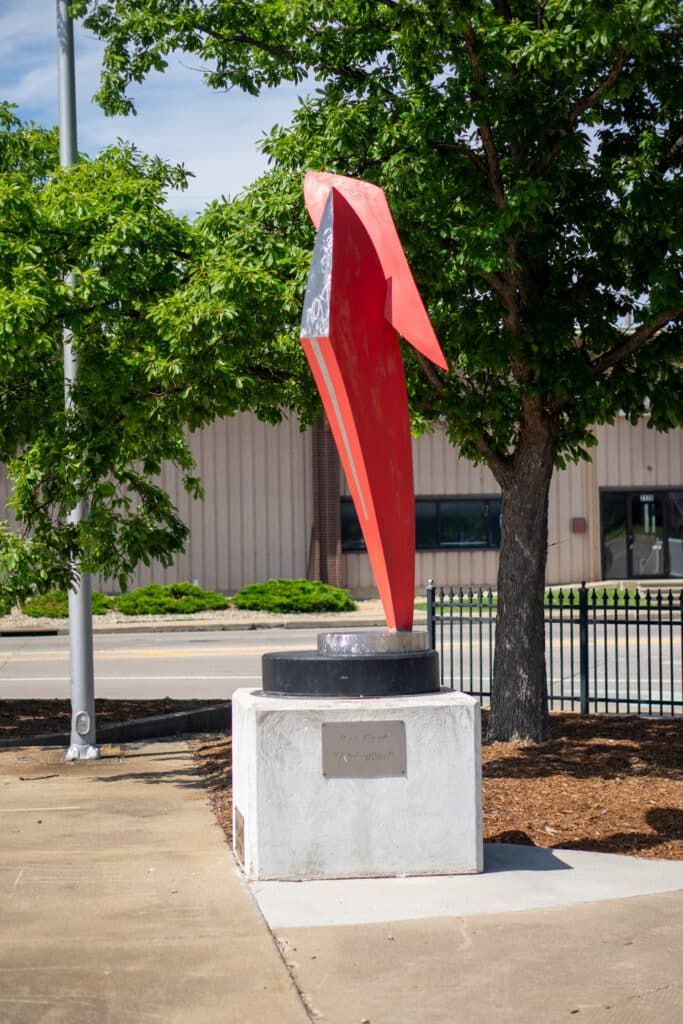
9. Abduction Sculpture
(Southeast corner of E. Calhoun St. & Campbell St.)
Ron Gard, a longtime Chicago-area sculptor and custom fabricator, is known for works that fold back on or juxtapose against themselves to create a sense of tension and animation.
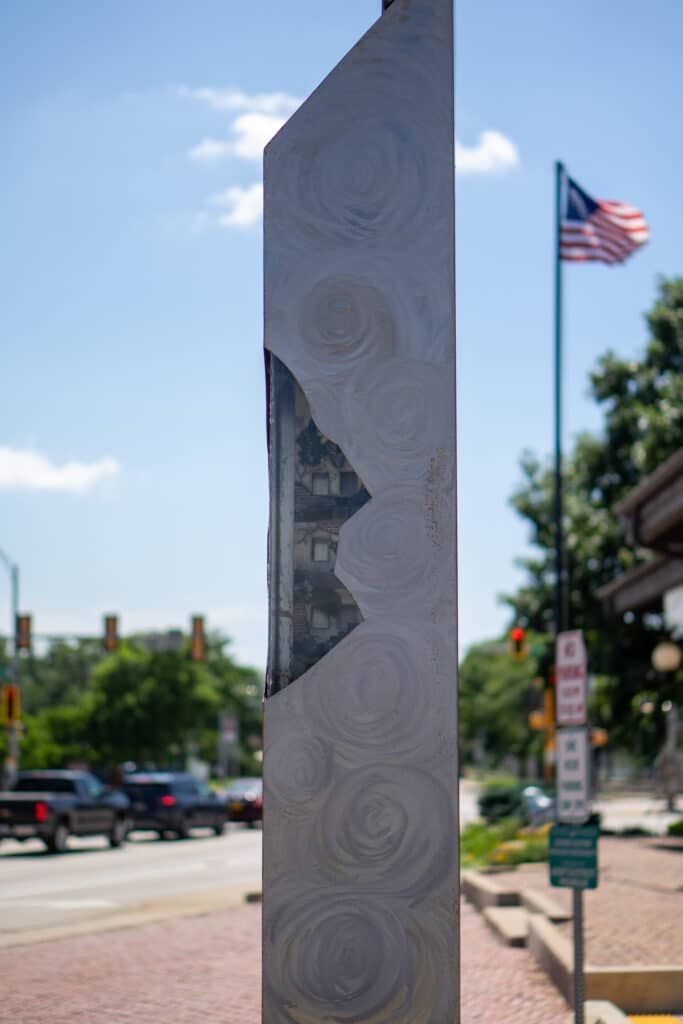
10. 20 Years Later: What Happened Here?
Artist: Stacia Iverson. Iverson describes this sculpture as "a piece created to reward curiosity and discovery" where the viewer will discover a detailed and complex scene hidden inside the sculpture.
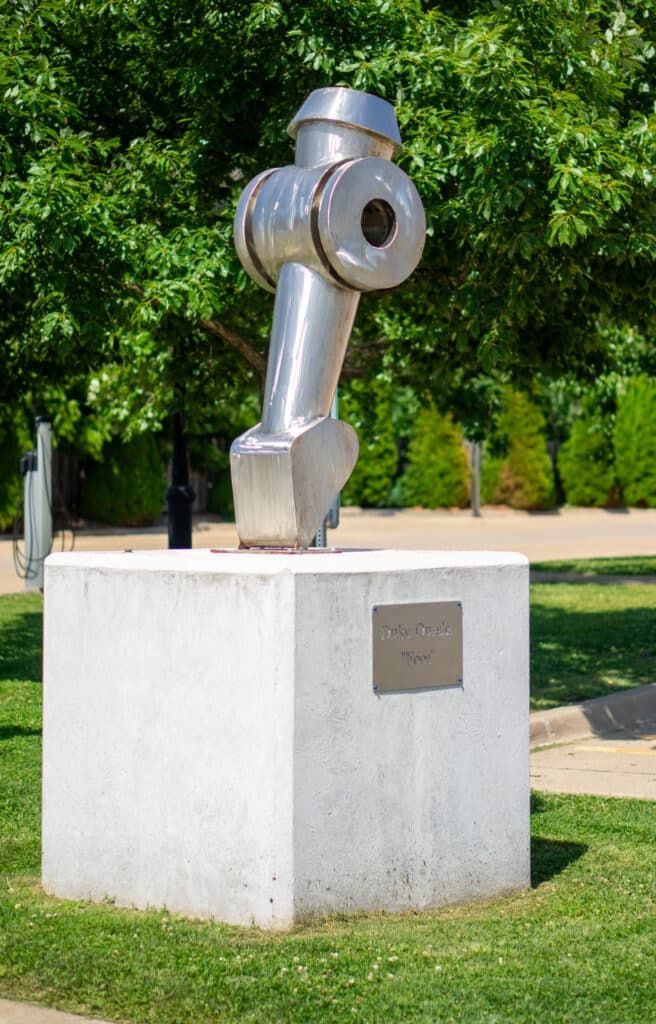
11. Foos
(Just north of Dollar General)
By isolating a single foosball player from its rigid team structure, Artist Duke Oursler transforms a functional game piece into a striking abstract metaphor for individuality and social dynamics.
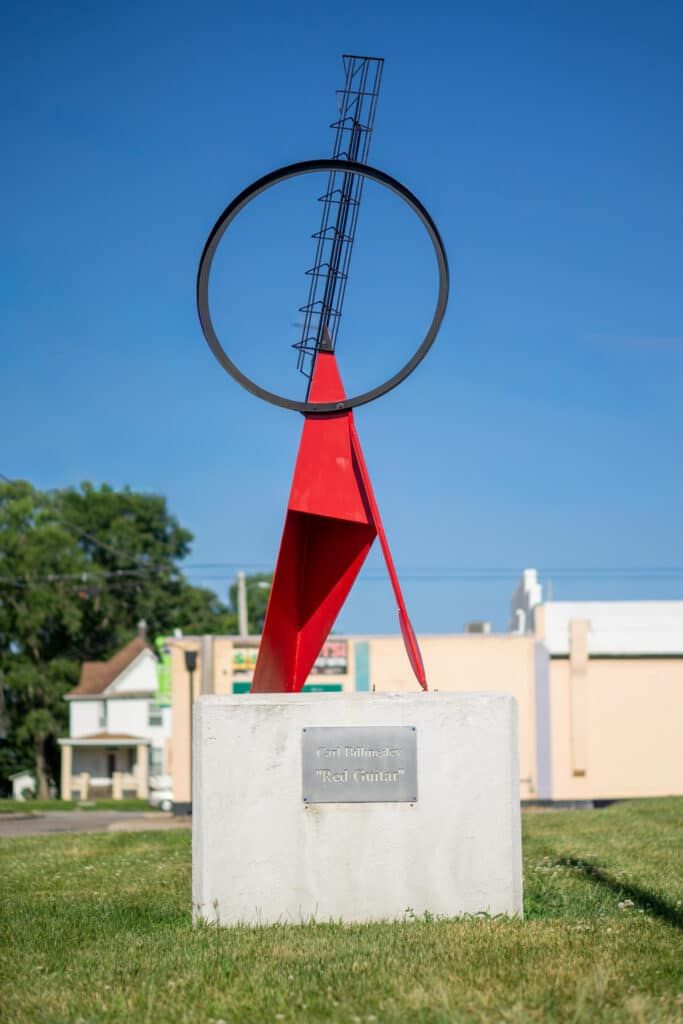
12. Red Guitar
Carl Billingsley is a longtime sculptor and retired Professor and Sculpture Coordinator at East Carolina University's School of Art and Design, working primarily in cast iron, stone, wood, and steel. His large-scale public work appears in collections and sculpture parks across the U.S. and internationally, including permanent installations in Norway, Israel, Estonia, Japan, China, and Brazil. He describes his abstract sculpture as a way of communicating about the human condition across barriers of culture and language.
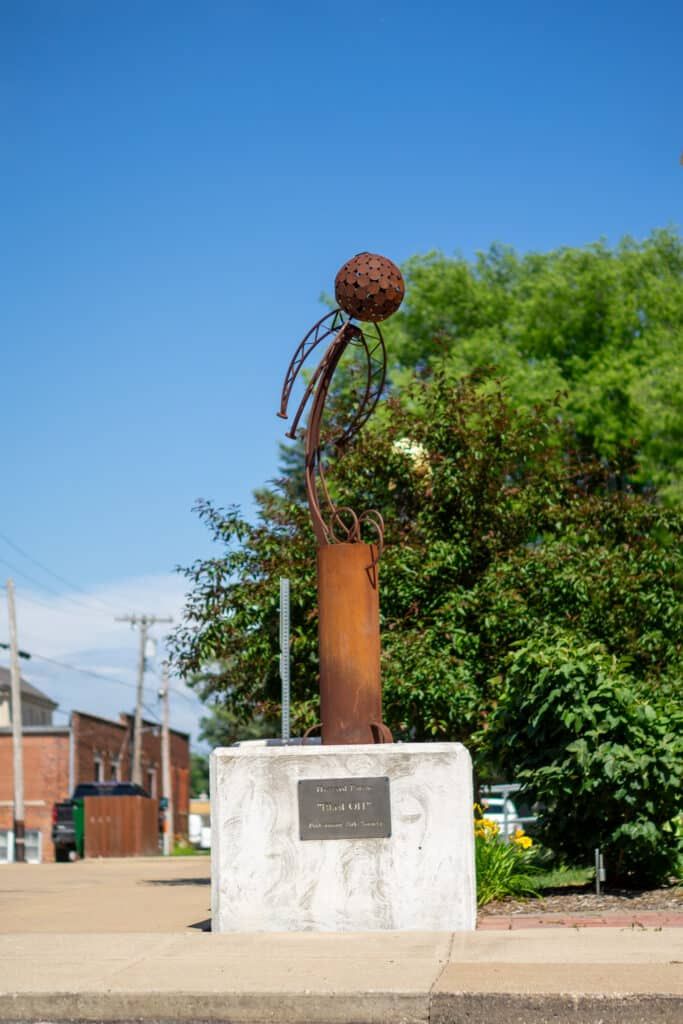
13. Blast Off
Howard Russo is a St. Charles, IL-based sculptor with an MFA in Jewelry and Metalsmithing and a career spanning blacksmithing, metalsmithing, and public sculpture. His steel work is typically cut, bent, and welded, then left unpainted to rust naturally for texture — his imagery is often driven by the sphere form and its repetition in nature.
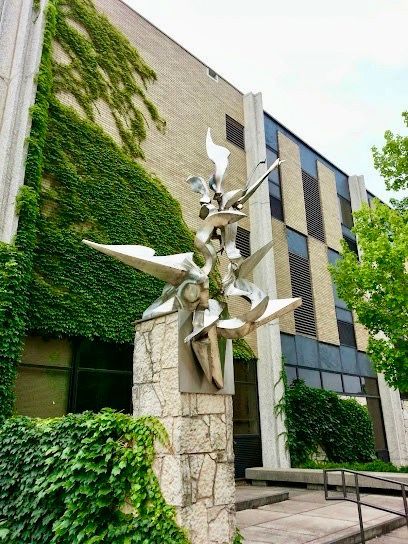
14. Ascension
(Knoblauch Hall, WIU Campus)
Richard Hunt was one of the most celebrated American sculptors of his generation — the first African American sculptor to receive a retrospective at MoMA (1971) with over 150 public sculptures installed across the U.S. Ascension was one of the recurring motifs across Hunt's public work: abstracted forms of flight, growth, and ascension that he used to symbolize freedom, themes he returned to across decades of commissions honoring Civil Rights leaders and African American history. WIU's Ascension (1997) reflects that vocabulary directly in its title and sits within Hunt's larger body of work exploring vertical, rising, welded-metal forms.
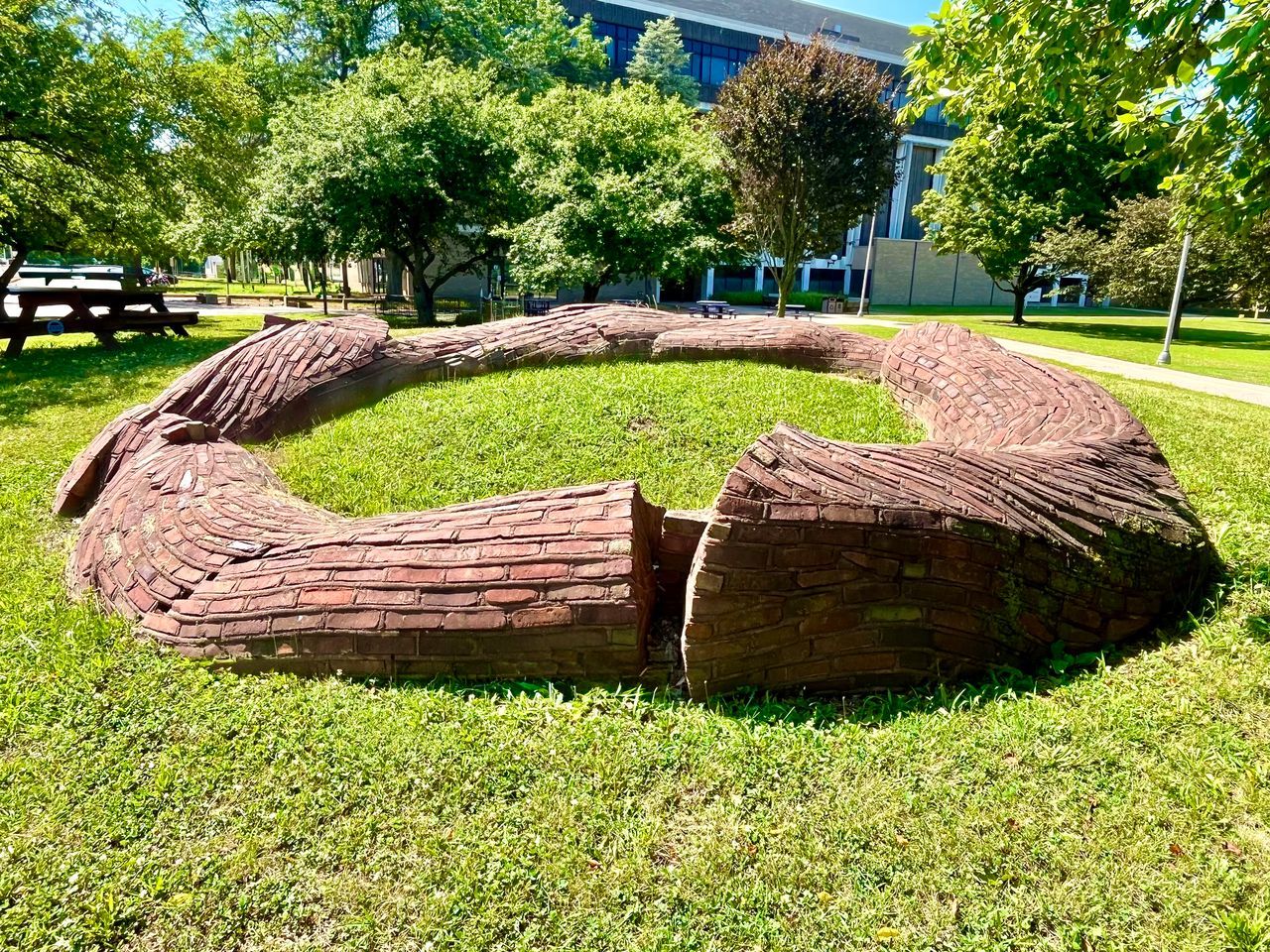
15. Ancient Hump - Western Berth
Built entirely from brick and mortar, this sculpture lies flat on the lawn at the north end of WIU's campus, at the foot of Malpass Library — it was designed to be viewed from above, from the library's windows. It takes the form of a rounded, arched brick wall that winds around in a circle, creating the impression of an undulating, below-ground form. The title and shape reference the Hopewell "hump ring," an ancient earthwork symbol of rebirth and regeneration used by the Hopewell peoples who inhabited the Ohio and Illinois river valleys, with mound and earthwork traditions dating back to roughly 1500 BC. John Spofforth, an Ohio-based sculptor known for large-scale brick and mortar work, copyrighted this piece in 1978; his brick sculptures also appear at institutions including the National Museum of American Art in Washington, DC.
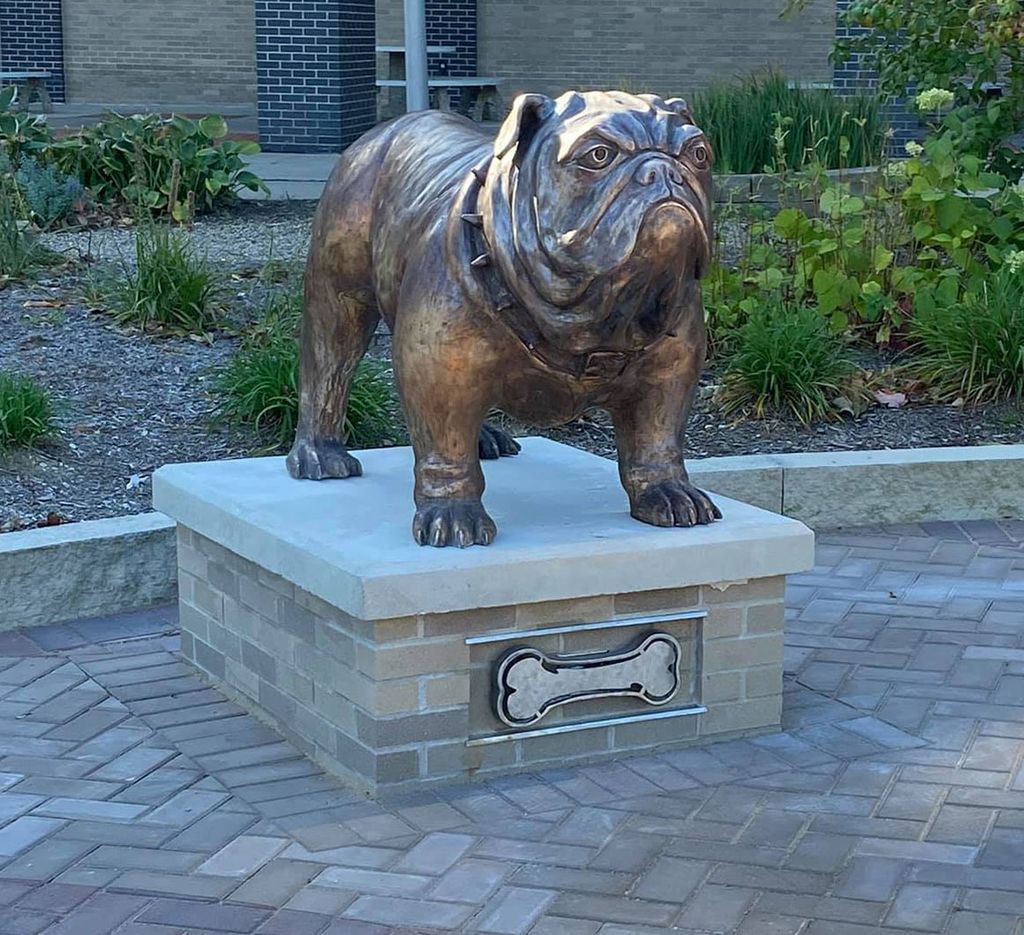
16. Rocky (bronze) Memorial
The Living Mascot Legacy: This sculpture serves as a dedicated mascot memorial honoring WIU's beloved live lineage of English Bulldogs, collectively known as "Colonel Rock" (or lovingly nicknamed "Rocky"). You can find Rocky outside the north entrance of the University Union Building.
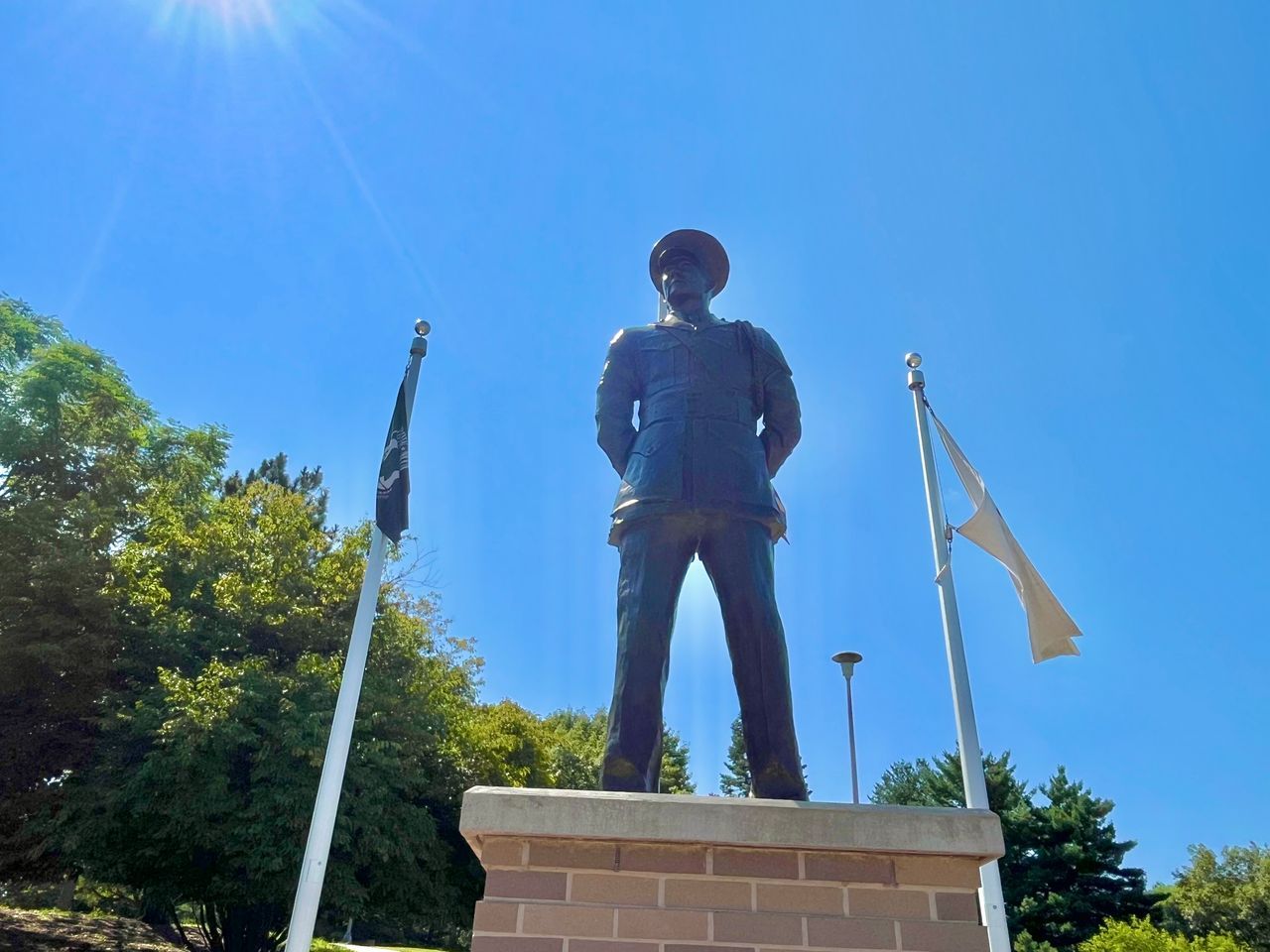
17. Ray "Rock" Hanson Statue
Hanson Field is named for former WIU football coach and athletics director Ray "Rock" Hanson, a Marine veteran. The original 900-lb cement Rocky the Bulldog statue was placed just north of the University Union in 1971, then relocated to the stadium's entryway when the facility was renovated in 2002.
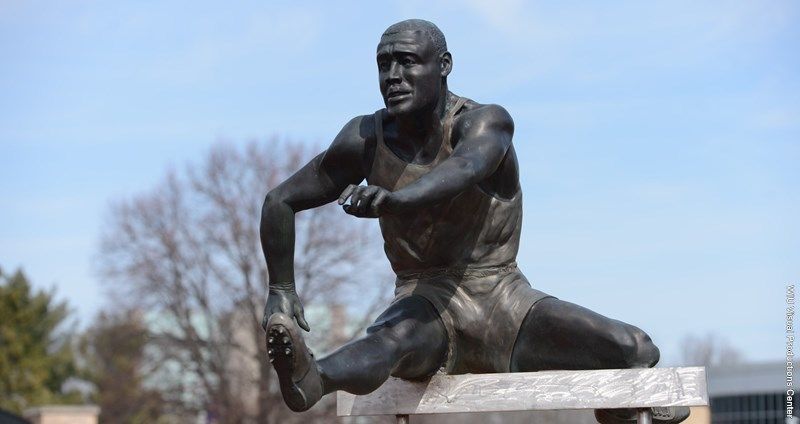
18. Lee Calhoun "The Runner" Statue
Titled "Excellence on Winged Feet," this life-size bronze sculpture near the stadium's southwest entrance honors former WIU track and field coach and two-time Olympic gold medalist, Lee Calhoun, who won the 110m hurdles at both the 1956 Melbourne and 1960 Rome Olympics.
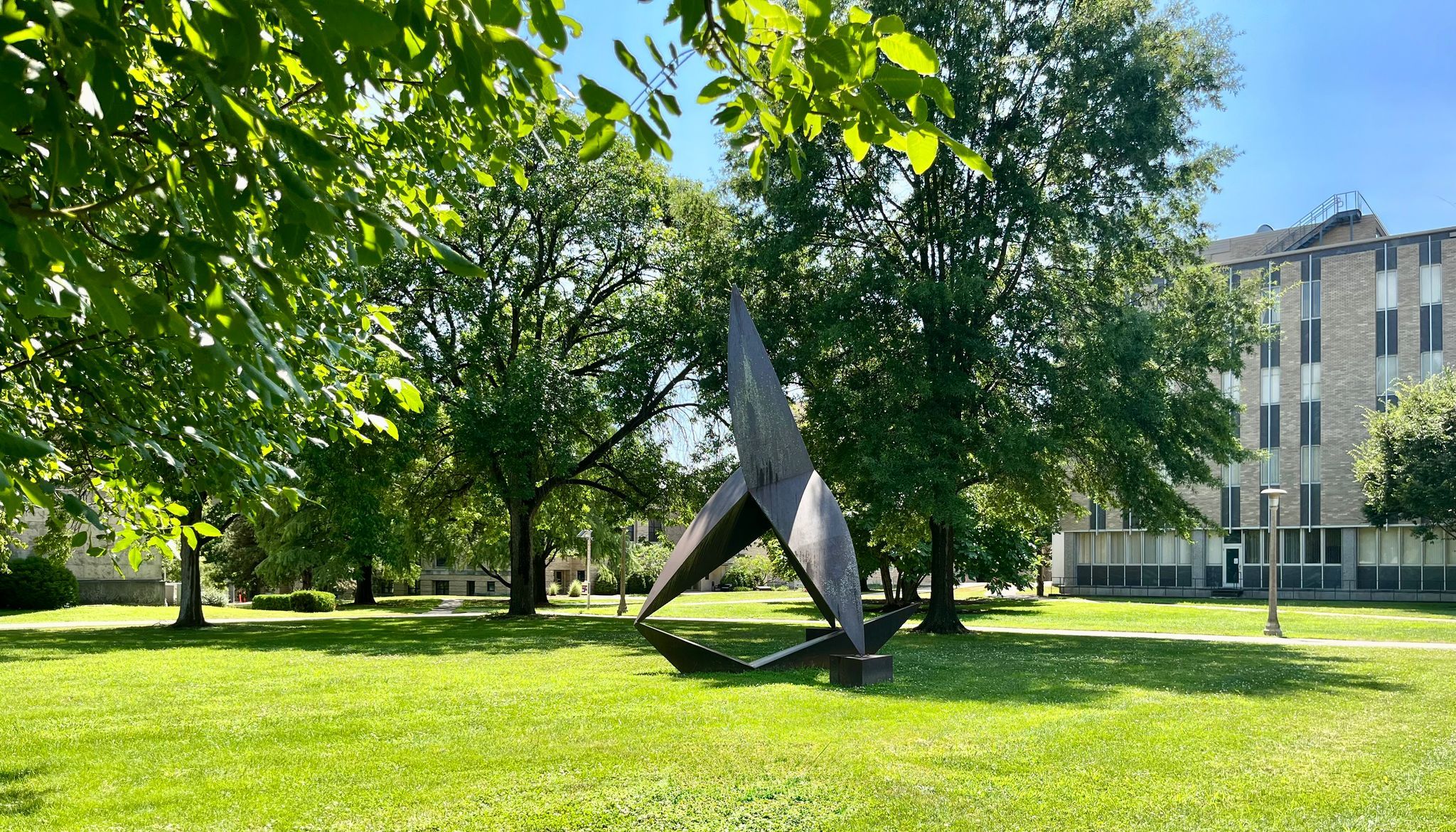
19. Commemoration '75
The sculpture was commissioned and installed to honor WIU's 75th anniversary (its Diamond Jubilee) as an institution of higher education. The three soaring legs symbolize the core branches of the university's historical growth—academics, student life, and the broader community—reaching upward from a shared foundation. Because it was designed and built by a member of WIU's own art faculty, George Potter, the piece serves as a permanent celebration of the university's internal creative talent and its commitment to integrating large-scale public art directly into the student landscape.
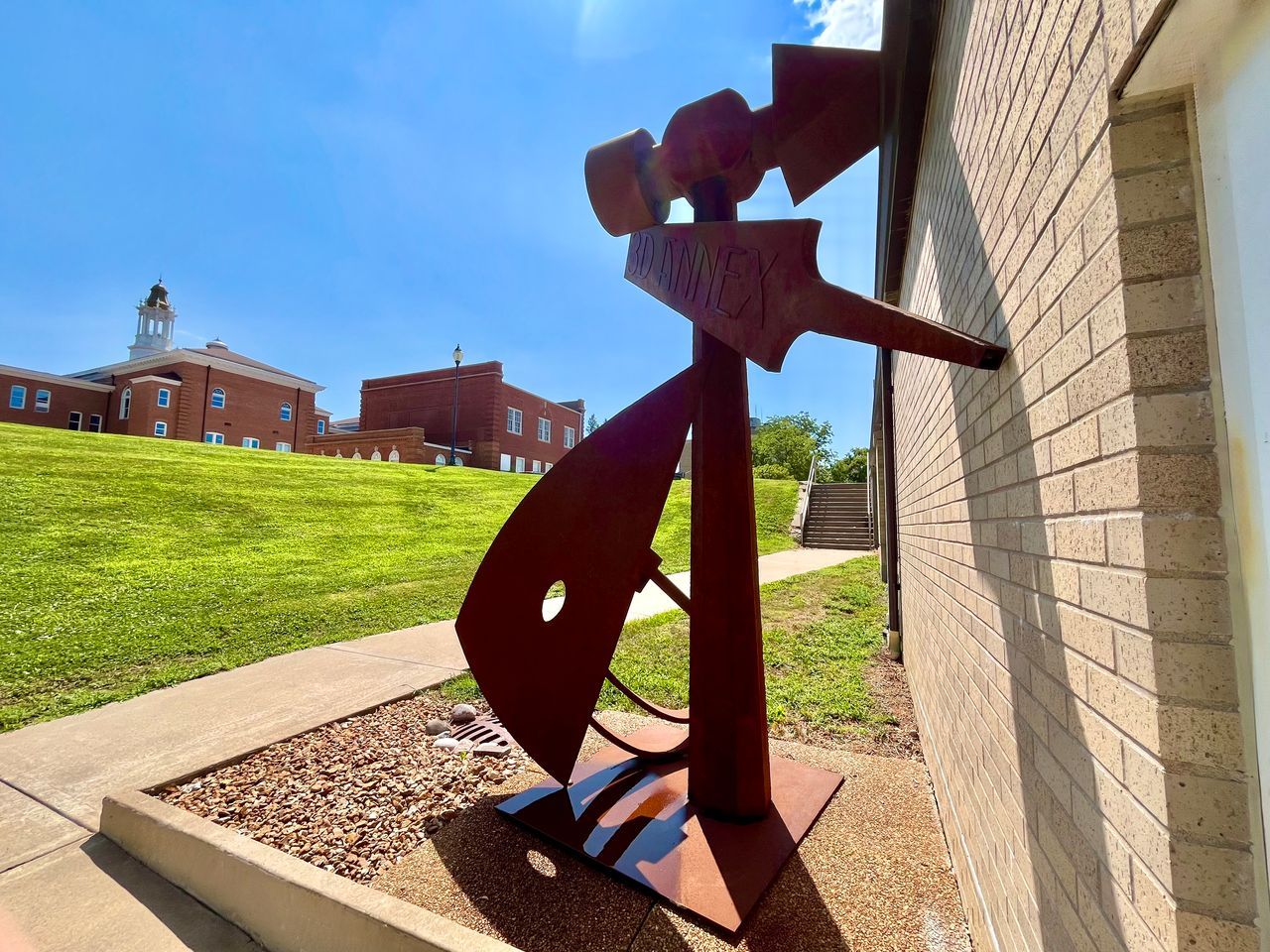
20. Garwood Hall Sculptures
Check out all the sculptures that surround Garwood Hall!
3D Annex Sculpture, created by artist Kyla Culbertson and installed outside the Western Illinois University Heating Annex. The piece serves as an artistic, tool-inspired signpost honoring the department building it sits beside. It incorporates a large weathered metal arrow emblazoned with the words "3D ANNEX" alongside a mechanical, gear-and-spoke abstraction that directly celebrates the hands-on, three-dimensional design and industrial studio practices taught right inside the building.
SpeedWrech by Michael Dunbar: SpeedWrench is a monumental abstraction of an actual machinist's speed wrench, reflecting Michael Dunbar’s lifelong fascination with 19th-century scientific instruments, timekeeping devices, and industrial tools. The sculpture honors the heritage of human mechanical innovation by turning a hyper-precise tool of labor into a dramatic, large-scale landmark celebrating structural balance and implied motion.
Signposts by Henry Charles "Duke" Oursler, a contemporary abstract artist and Western Illinois University sculpture professor. A Metaphor for Growth: Situated right outside the Department of Art & Design's home at Garwood Hall, this dynamic weathering-steel sculpture features three massive interlocking circular rings balanced precariously on a heavy industrial cylinder. True to its name, Signposts is designed to mimic a distorted, multidirectional compass or signpost. Professor Oursler crafted the piece to serve as a visual metaphor for the winding, intersecting paths of higher education, scientific exploration, and creative discovery that students navigate during their time on campus
Spaceflight by Jerry Peart: True to its title, Spaceflight is composed of interlocking, painted steel planes designed to capture a sense of aerodynamic propulsion, upward liftoff, and mechanical ascent. Peart intentionally breaks the forms up with bold architectural finishes—combining raw, grinding metal textures on the top wing-like structures with solid blocks of primary colors on the support base to create shifting layers of shadow and light as you walk past.
A Splintered Reality by Gavin B MacLean: Constructed from bundled, dynamically angled laths of raw wood anchored to a steel base plate, the sculpture acts as an organic, exploded burst against the heavy stone masonry of the building behind it. The piece explores themes of cognitive fragmentation, representing how individual perspectives shatter, re-align, and splinter apart under the pressures of modern social and academic environments.
The Tic-Tac-Toe monument is an original public sculpture crafted by the prominent Midwestern abstract artist Michael Dunbar, the same sculptor behind SpeedWrench. Much like SpeedWrench, this piece belongs to Dunbar's widely recognized collection of massive, fabricated metal works that look like oversized instruments of science and industrial labor. The Mathematical Meaning: The sculpture is titled Tic-Tac-Toe as a playful, artistic nod to its open grid-like frame, interlocking intersections, and rhythmic geometry. Rather than representing a literal game board, the precision lines, geometric scales, and balanced steel beams are designed to evoke early American technology, navigational transit, and the celestial alignments of ancient mathematical tools.