Visit Unforgettable Forgottonia History Tour
Step back in time with a self-guided journey through the hidden histories of Macomb and McDonough County. from the courage of civil rights leaders and the brilliance of inventive thinkers like the creator of Monopoly, to the soulful rhythms of national music legends. Along the way, you’ll encounter gritty Prohibition-era stories and nostalgic Cold War relics. It’s more than an itinerary; it’s a deep dive into the extraordinary people and places that make Forgottonia truly unforgettable.
1. The Randolph House Hotel
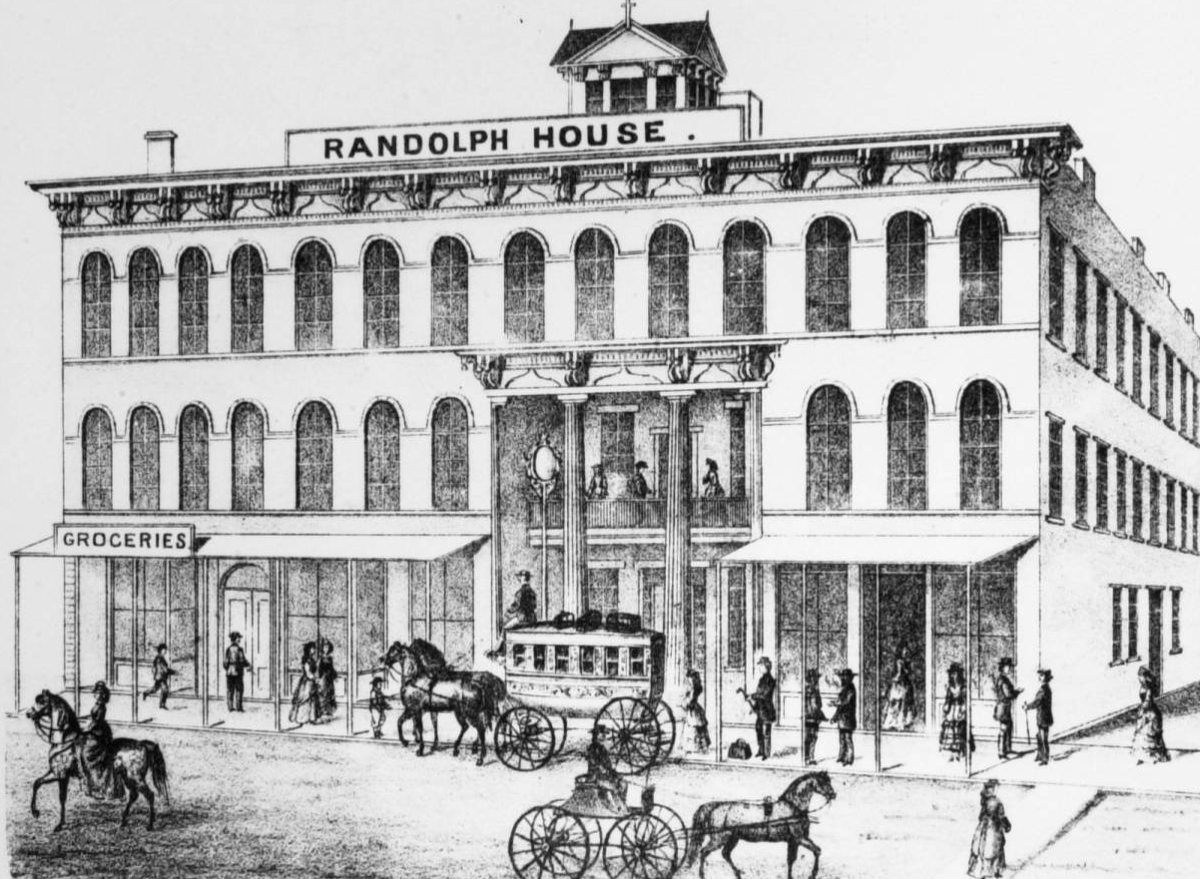
The Randolph House Hotel was built in 1857 by William H. Randolph, a prominent businessman in Macomb. The hotel was known for its unrivaled elegance. Guests were met at the curb and their horses were taken to a nearby stable, bellhops carried their luggage and ran errands for them, and transportation was provided to and from the newly built train station.
Randolph was the county’s leading Republican, giving him the opportunity to entertain and meet with Lincoln during his visits to Macomb. Lincoln stayed in the Randolph House on two occasions in 1858 – on Wednesday, August 25 and Monday, October 25 – following speeches ahead of his Presidential appointment. After the President’s assassination, the room became a local Lincoln shrine.
This building was, in earlier times, the finest hotel in Illinois between Chicago and Quincy. During the campaign of 1858, Abraham Lincoln was a guest here on at least two separate occasions.
🎩 Hear from Abraham Lincoln about his stay at The Randolph House Hotel here.
2. Western Illinois Museum
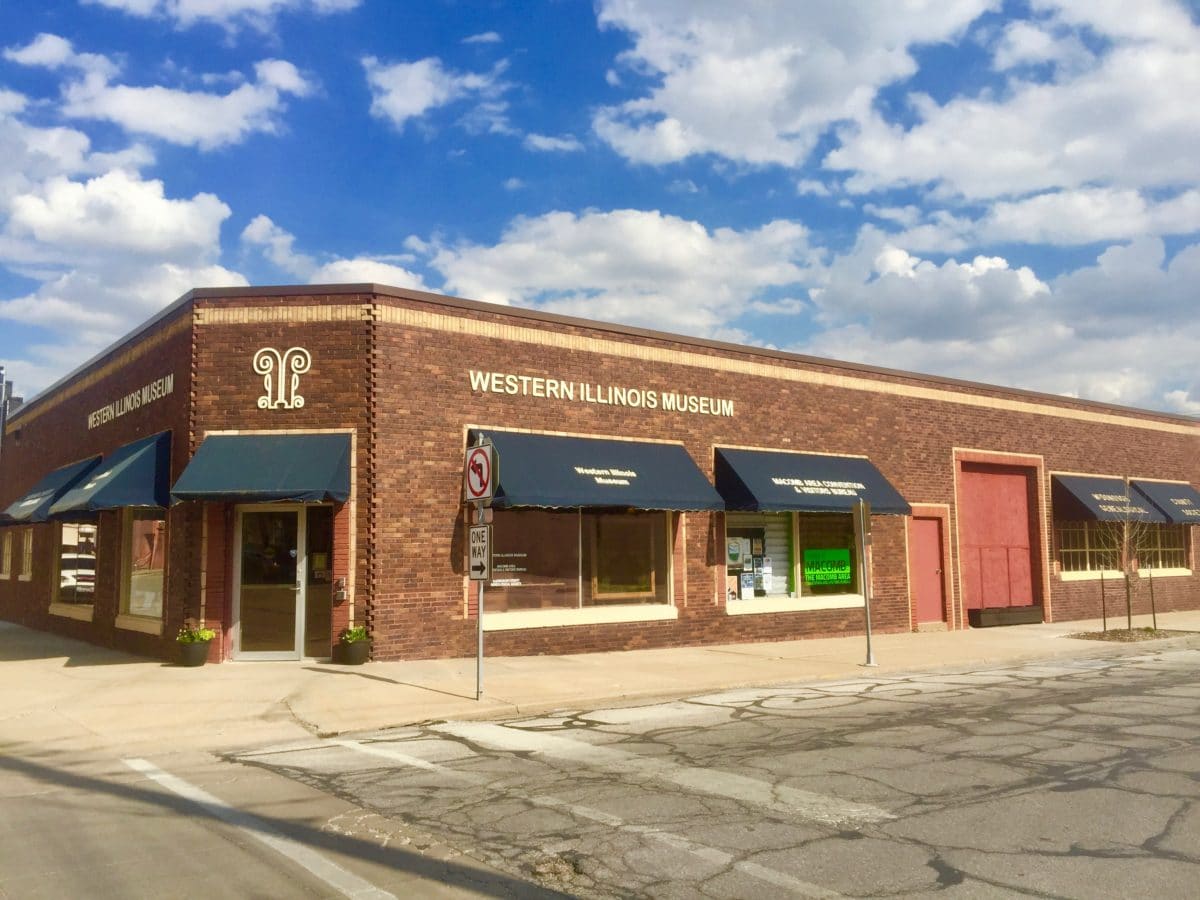
At the Western Illinois Museum, you will explore a rich collection of 6,000+ artifacts, historical documents, and memorabilia that showcase the people, events, and stories that have shaped Western Illinois. The museum highlights the region’s cultural, social, and economic history, offering visitors a window into the diverse heritage of this part of the state. The Western Illinois Museum is a featured stop on the new Illinois America 250 - "Passport to Illinois".
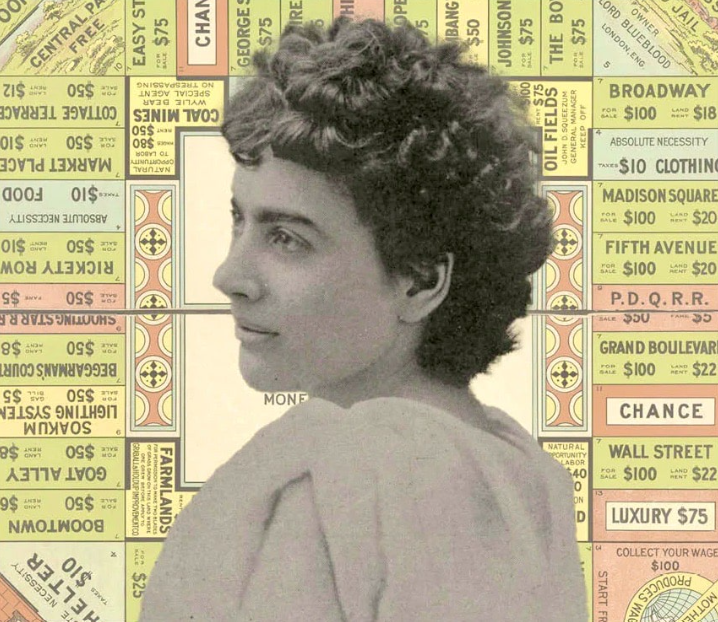
3. Lizzie Magie's House
Born in Macomb in 1866 to an abolitionist father, Elizabeth "Lizzie" Magie was a pioneering feminist and intellectual who created The Landlord’s Game in 1903. Designed as a tool for social change, her game featured the first "Go to Jail" instruction and a circular board inspired by the streets of downtown Macomb. Though her work was later appropriated and sold to Parker Brothers as Monopoly, Macomb reclaims her legacy through a bronze "Macombopoly" statue located in the Courthouse Square.
Visitors can still see her 1864 birthplace at 222 North College Street, where the home’s original barn remains standing. This site and the downtown monument serve as a permanent tribute to Magie’s radical mission to use play as a means of educating the public about economic inequality.
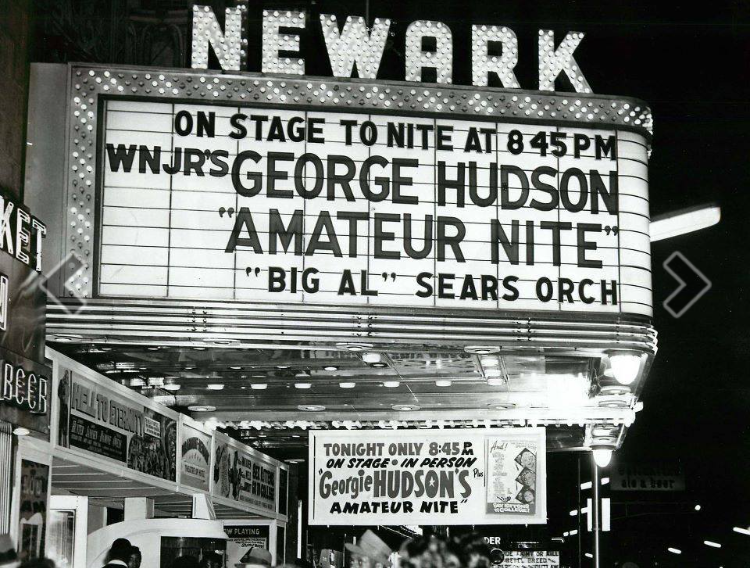
4. Big Al’s Sears House
Albert Omega “Big” Al Sears (1910–1990) was a Macomb, IL native and a pivotal figure in the evolution of American music. A master saxophonist, he performed with jazz legends Fats Waller, Chick Webb, and Lionel Hampton before joining Duke Ellington’s Orchestra as a soloist in 1944. Sears played a crucial role in the birth of Rock ‘n’ Roll; his 1951 hit “Castle Rock” is credited by historians as a bridge between Jumpin’ Blues and the new genre. Beyond performing, Sears was a trailblazing executive at ABC-Paramount, where he broke racial barriers and protected the royalties of artists like Ray Charles. He later founded his own labels and recorded with Aretha Franklin, leaving a legacy as a primary progenitor of R&B, Soul, and Rock ‘n’ Roll.
Macomb hosts the annual Al Sears Music Festival in his honor, which takes place on Sept. 18-20, 2026.
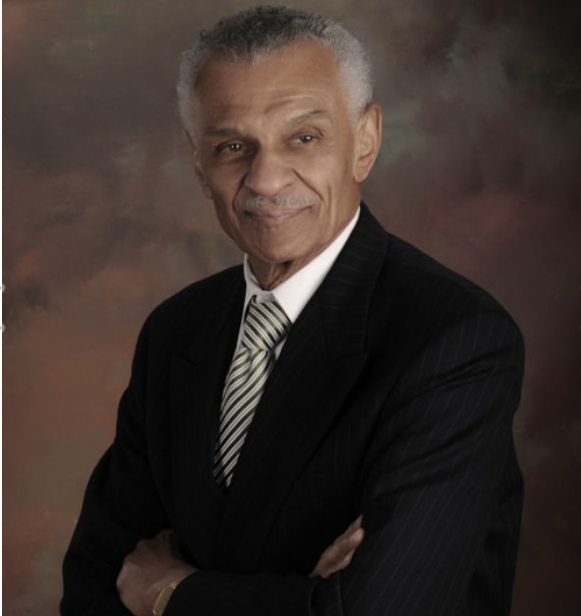
5. C.T. Vivian's House
Rev. Dr. C.T. Vivian, a Presidential Medal of Freedom recipient and close confidant of Dr. Martin Luther King Jr., grew up in Macomb and graduated from Macomb High and Western Illinois University. A key strategist of the Civil Rights Movement, Vivian organized the first Nashville sit-ins and participated in the Freedom Rides alongside John Lewis. He is also credited with creating the educational program that became Upward Bound.
The site of his childhood home is currently being transformed into the C.T. Vivian Center and Park. Nearby, a 75-foot mural honors his journey from a local student to a national icon. Remarkably, Vivian passed away on July 17, 2020—the same day as his lifelong friend and fellow activist, John Lewis.
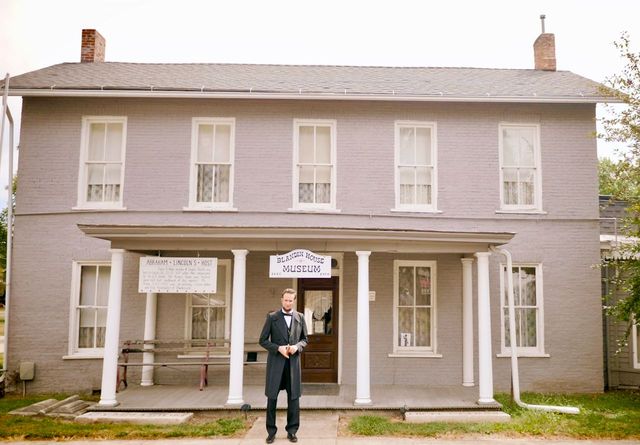
6. Blandin House & Blandin House Museum
The Village of Blandinsville was a bustling place in the 1850. The town once hosted Abraham Lincoln and, today, the Blandin House Museum pays honor to this very visit.
In October of 1858, as Lincoln was stumping throughout Illinois for a seat in the State Senate and in between debating Stephen Douglas, he stayed with postmaster, businessman, and fellow lawyer, Charles R. Hume and his wife, Harriett Blandin. The Hume home sat on Main Street, just over 600 ft. west of the Blandin House. It was destroyed by fire on August 21, 1914.
On May 16, 1970, a group of concerned citizens bought the vacant brick house on the east side of the village park and started a museum to honor founding father, Joseph Blandin and his family. Over the years, the Museum has added many artifacts from the history of Blandinsville.
The Blandin House Museum is located on Chestnut Street, west of the Blandinsville village park.
🎩 Learn more from Abraham Lincoln about the Blandin House and the Blandin House Museum here.
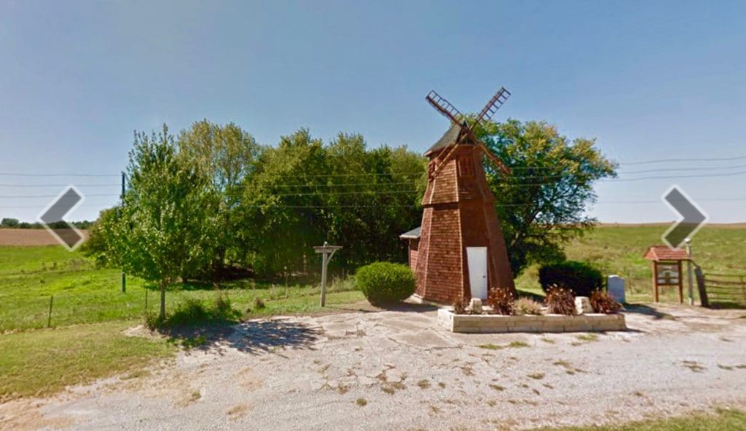
7. Swearingen's Old Mill Tourist Camp Windmill
In 1927, Swearingen’s Old Mill Tourist Camp opened in McDonough County‘s village of Industry, IL. It was an oasis for tourists featuring cabins, a restaurant, a gas station, and this windmill. After the business closed in 1960, all of the structures were torn down except for the iconic Windmill which still stands today.
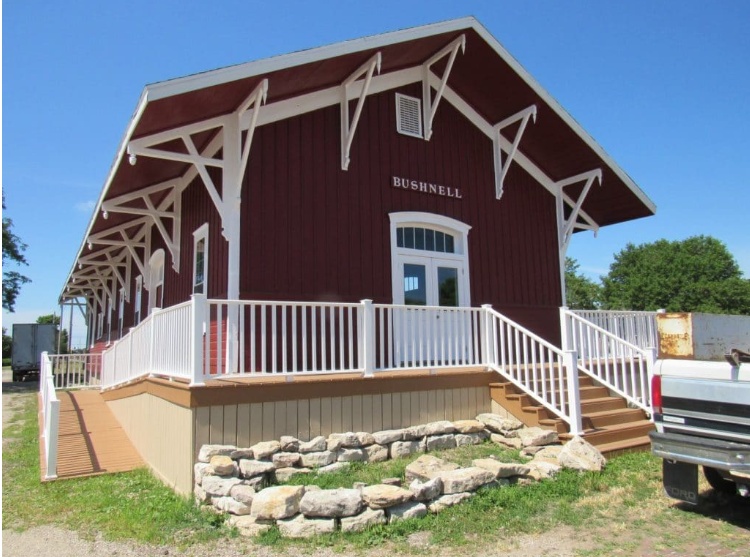
8. Bushnell Freight House Depot
The community of Bushnell has a long history with railroads. The city was founded in 1854 after Northern Cross Railroad built tracks through the area and named the site after the railroad company’s president, Nehemiah Bushnell. Today, freight trains and the Illinois Amtrak line, as they have for over a century and a half, rumble daily through the town and past the historic Bushnell Freight House Depot.
The Bushnell Historical Society has learned through its research that the depot is likely to be the oldest one in Illinois. The exact year of the depot’s construction is undetermined, but it was presumably built in the mid 1800s.
The Bushnell Citizens Coalition has renovated the structure with the goal of making the Bushnell Freight House Depot available as a venue for receptions, gatherings and reunions.
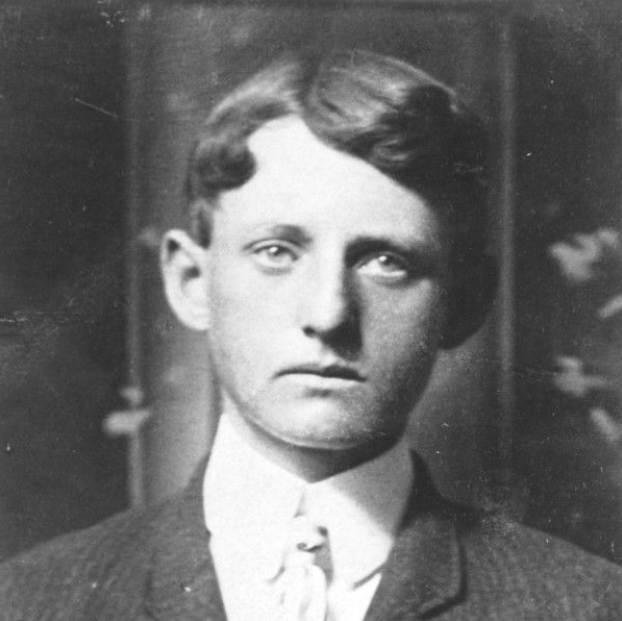
9. "Kelly" Wagle - The Bootlegger - House
Thomas "Kelly" Wagle was McDonough County’s most infamous figure during Prohibition. A local "Robin Hood" with a violent streak, Wagle smuggled liquor from Al Capone’s Chicago syndicate to the region, allegedly even hiding his stash in a local church basement. His most colorful exploit involved hiring "Shoeless" Joe Jackson and other banned "Black Sox" players as ringers for a 1921 Colchester baseball game.
Wagle’s life ended in a 1929 "gangland-style" assassination that remains unsolved. His complex legacy as a generous benefactor and suspected murderer is immortalized in Dr. John Hallwas’s award-nominated book, The Bootlegger.
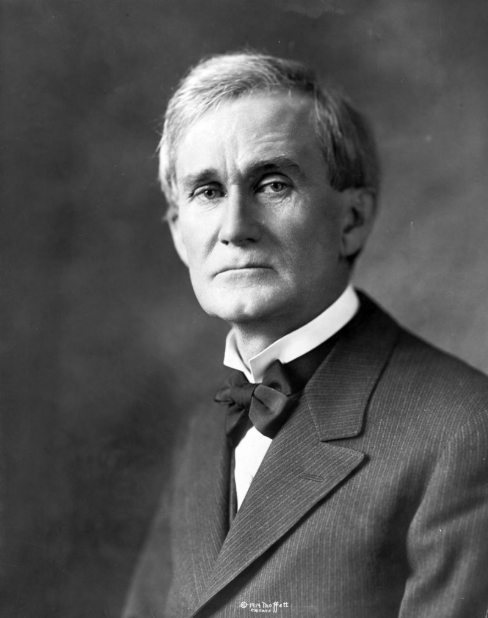
10. Sherman Hall
A prominent lawyer and politician, Lawrence Yates Sherman began his career as a Macomb city attorney and county judge before rising to Speaker of the Illinois House. He played a pivotal role in establishing the Western Illinois State Normal School (now Western Illinois University) in Macomb; the university’s iconic Sherman Hall is named in his honor.
Sherman later served as Illinois Lieutenant Governor and as a U.S. Senator (1913–1921), where he became a national figure for his staunch opposition to the League of Nations. A respected Republican leader, he was even considered a potential presidential candidate in 1916.
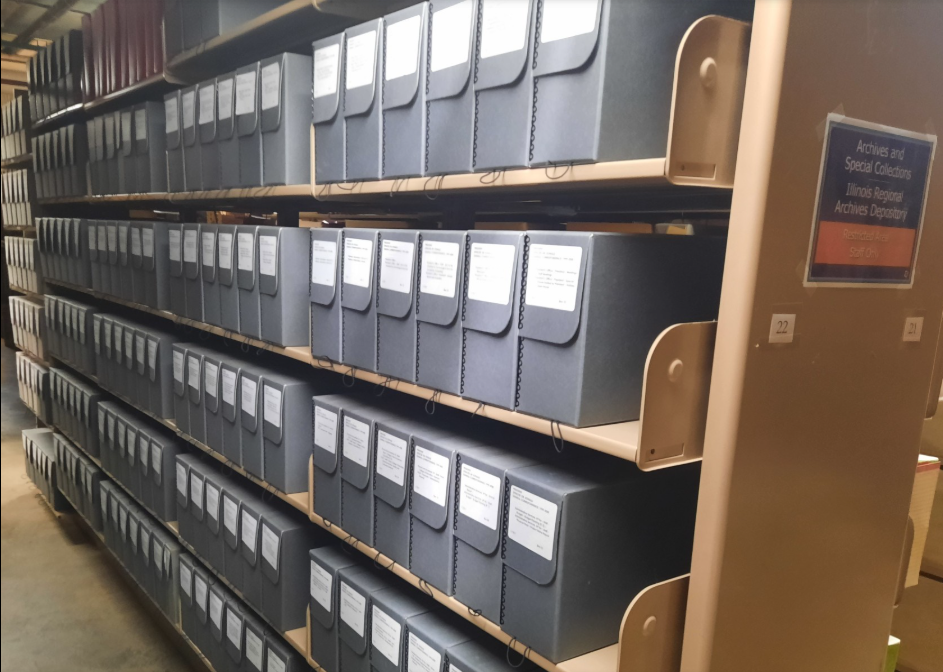
11. Archives at WIU
The University Archives is the official repository for university records. Materials housed in the University Archives include records of administrative offices and faculty and student organizations, publications issued by the university, student newspapers, yearbooks, faculty publications, and masters theses, as well as photographs, oral history tapes, and memorabilia relating to the university. Contents of the University's time capsule, opened September 23, 1999, as part of the University's Centennial Celebration, are now part of the Archives' permanent collection.
The Archival Collection is a record of the university's contribution to knowledge as well as a reflection of its development and operation.
Special Collections documents the cultural, economic, and natural heritage of west-central Illinois. Among the multi-faceted special interest collections are The Center for Regional Authors (focused on books and papers by and about John Hay, Edgar Lee Masters, Carl Sandburg, and dozens of other noted writers), the Baxter-Snyder Center for Icarian Studies (centered on early Nauvoo), and the Center for Hancock County History (which includes the extensive Mormon Collection). Publications of the Decker Press (the Midwest's first poetry publisher), and a large number of Civil War Manuscripts from Illinois are significant features of Special Collections as well. Also included are collections related to famous singer and actor Burl Ives (a native of downstate Illinois), noted African-American civil rights activist C. T. Vivian (who was raised in Macomb), and prolific, distinguished historian John Hallwas (who produced thirty books, hundreds of articles, several plays, and many educational programs focused on Illinois) among many other figures. A vast amount of regional materials, such as county and town histories, oral history tapes, diaries, letters, maps, photographs, organizational records, and newspaper clippings reflecting life as it once was, and now is, in west-central Illinois are also in Special Collections.
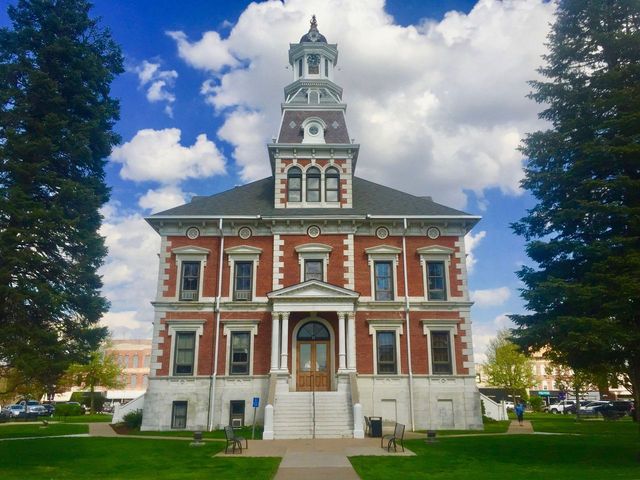
12. McDonough County Courthouse
McDonough County’s first courthouse was built of logs in 1831 and cost $69.50. It was located at the northeast corner of the square. The second courthouse was built in 1835 and stood on the same grounds as the current courthouse. It was two stories and had a stone foundation, was made of brick with a cupola that sat in the center of the building. In 1858 an ambitious politician by the name of Abraham Lincoln spoke to members of the community from the Courthouse on two separate occasions, one of them in the pouring rain to a crowd of more than 4,000 spectators.
The current courthouse was constructed in 1871. Noted governmental architect Elijah E. Myers designed the building in the Second Empire style and the courthouse is one of the few remaining buildings of its type in the county.
The building houses the County Clerk, Treasurer and State’s Attorney’s Office among others. The courthouse was added to the National Register of Historic Places in 1972. In the late 1970s, the county rehabilitated the building to restore its original exterior.
Established in 1830, McDonough County is named for Commodore Thomas McDonough who led a successful battle against the British on Lake Champlain in the War of 1812.
The McDonough County Courthouse is one of 10 sites that gave McDonough County Abraham Lincoln National Heritage Area status and can also be visited as part of Macomb‘s Looking For Lincoln Self-Guided Tour.
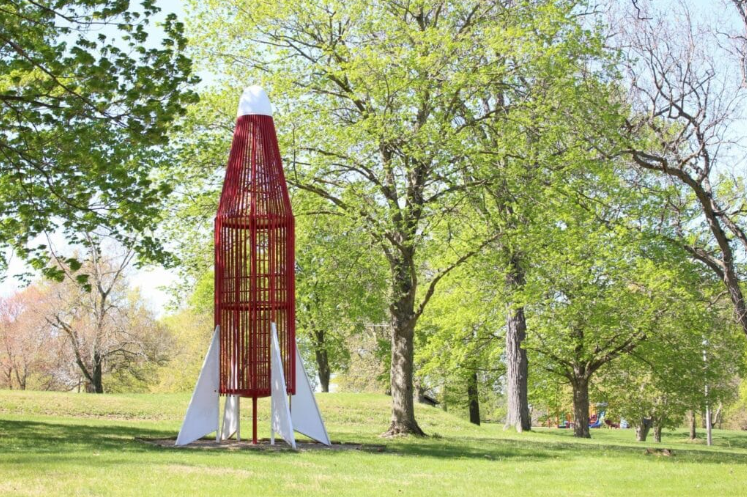
13. Space Rocket Slide - Glenwood Park
The Space Rocket Slide in the Macomb Park District‘s bucolic Glenwood Park is a rare and historic piece of unique Cold War era playground equipment designed to inspire interest in space exploration.
The rocket holds a special place in history. It’s an icon of technological progress that’s both revered and feared at the same time. During the sixties of the last century, the United States and the Soviet Union was gripped by the space-age fever, and the rocket emerged as the fundamental symbol of the space rivalry. Throughout America, as well as the Eastern bloc, rocket shaped structures began popping up across children playgrounds to foster curiosity and excitement about the space race among kids. Aside from rockets there were other fixture resembling various space-age equipment such as satellites, radar tower, planets and even submarines that kids can climb, swing and slide from.
The “Space Rocket” at Glenwood Park in Macomb, is a nearly three story red rocket that when installed in the 1960s had an attached metal slide. It was decommissioned in 2011 due to potential safety hazards. Although the slide was removed, the rocket part was saved and now serves as a park sculpture and historic piece of artwork.
A similar Rocket Slide from the Cold War era was also featured in 'Stranger Things' recently.
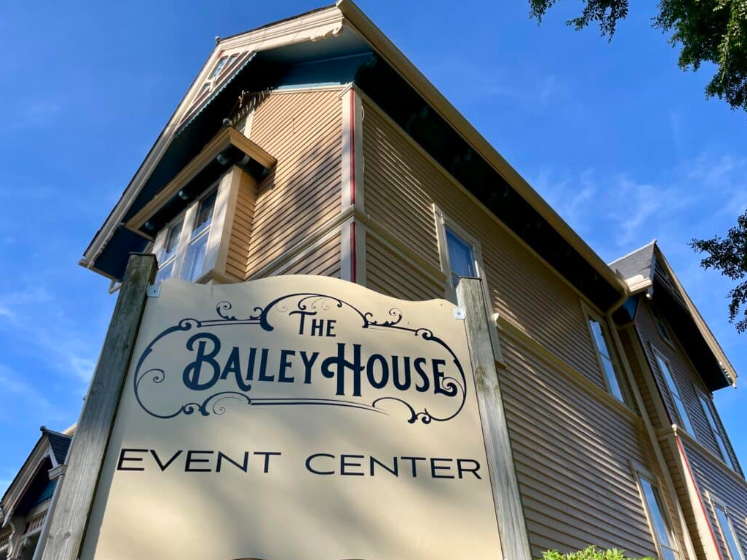
14. Bailey House Event Center
The historic Bailey House was built in 1887 by William S. Bailey, founder and first president of the Union National Bank of Macomb, Illinois. The house is an Eastlake style Victorian structure that features a grand foyer with large elaborate cherry staircase, a reception parlor, drawing and dining rooms, library and kitchen. Also displayed in the interior are hardwood and parquet floors, wood and iron fireplaces, and elegant lighting fixtures.
In 1982 the Bailey House property was generously donated to the McDonough County Historic Historical Society. Today this beautifully restored, historic treasure is an event center available to rent for receptions, family gatherings or private events.
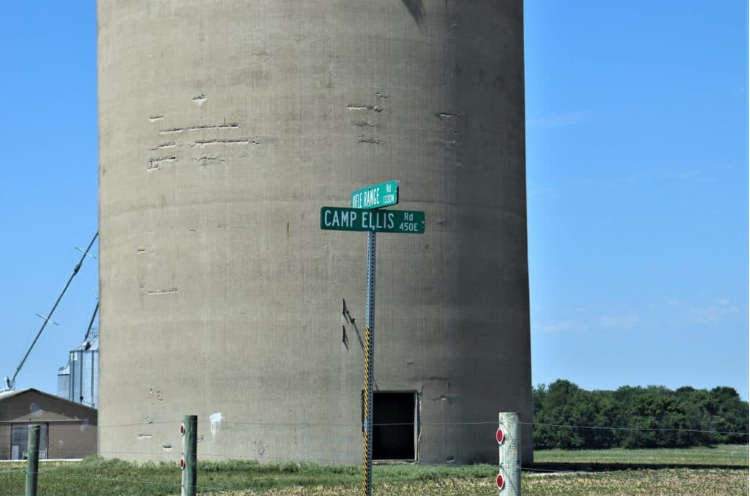
15. Camp Ellis – Former WWII POW Camp / The Easley Pioneer Museum
Located near Ipava, the 18,000-acre Camp Ellis was a massive WWII Army training center and POW camp that once housed 25,000 troops and 5,000 German prisoners. Built in 1942 due to its proximity to the Galesburg rail hub, it functioned as a "city unto itself" with over 2,200 buildings.
Today, visitors can spot historic remnants like cement water towers, rifle range walls, and chimney stacks. A comprehensive collection of camp artifacts is preserved at the Easley Pioneer Museum in Ipava (Open April–Nov, Tue/Fri, 10 a.m.–4 p.m.).
16. Chandler Park
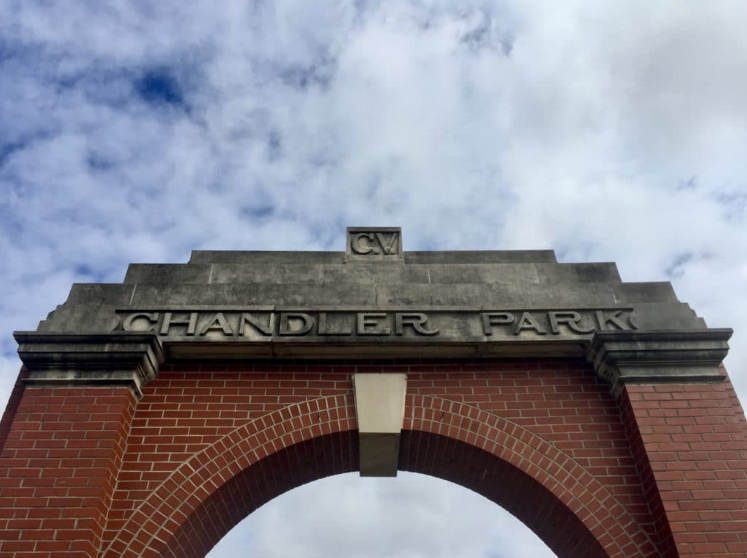
Established in 1893 through the benevolent donation of Macomb business man C.V. Chandler, historic Chandler Park sits at the heart of Macomb, in the center of McDonough County. With it’s original brick sidewalks, iconic gazebo and century old trees, this scenic park is home to several historic monuments and host to many of the towns festivals and events.
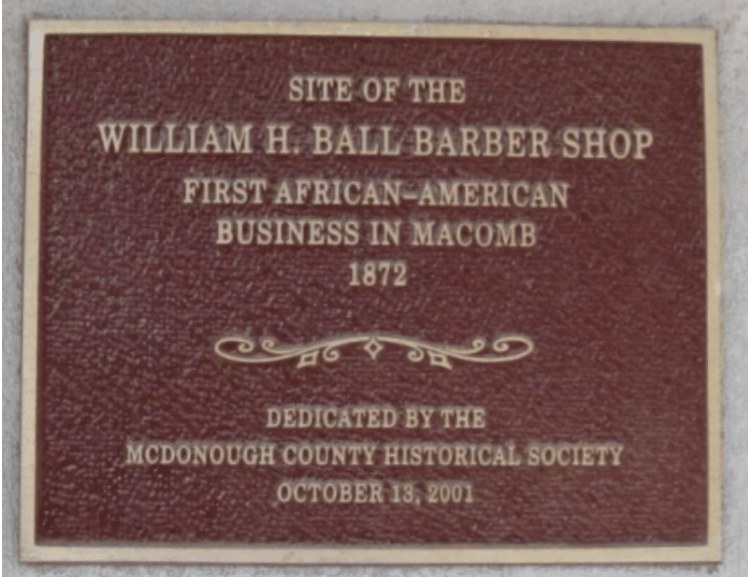
17. Willian Ball Barbershop - First Black Business in Macomb
This location marks the site of Macomb’s first Black-owned business, a barber shop opened in 1872 by James B. Fields and William H. Ball.
James B. Fields: Born into slavery in Missouri, Fields escaped to Illinois in 1862. After arriving in Macomb in 1866, he trained as a barber and later became a renowned Baptist preacher and orator. He founded Macomb’s first Black church in 1875 and gained national fame for his lectures challenging the agnostic Robert G. Ingersoll.
William H. Ball: A Pennsylvania native, Ball was a dedicated local businessman and family man whose son also apprenticed in the trade.
Together, Fields and Ball established a landmark of Black entrepreneurship and community leadership in the heart of Macomb.
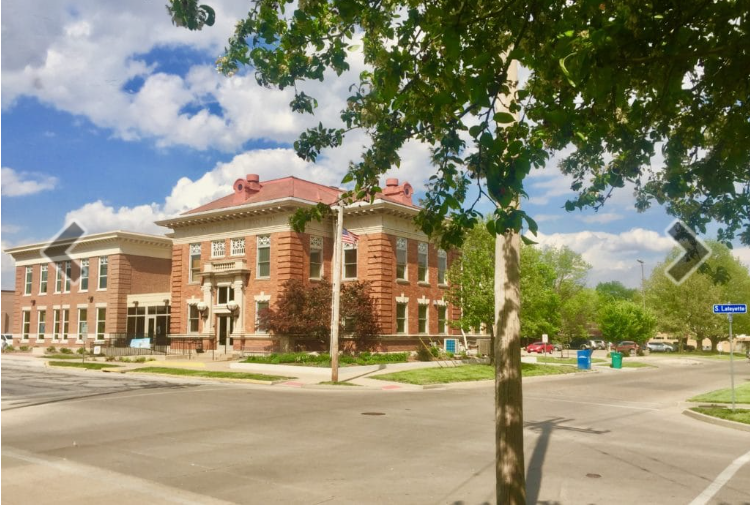
18. Andrew Carnegie Macomb Public Library
The Macomb City Library was formed by action of the City Council. The Library was organized on November 10, 1881 when the mayor appointed a Library Board of Directors of nine members. The first library opened on April 8, 1882 on the upper floor of the Stocker Building at 109 South Side Square.
In 1883 when the City of Macomb purchased the building at 108 South Lafayette Street, the Macomb City Library was moved to the second floor. On October 28, 1904 the Macomb City Public Library opened in a new Andrew Carnegie Building at 235 South Lafayette Street. The Macomb Library building is one of 106 libraries in Illinois that were built from 105 grants (totaling $1,661,200) awarded by the Carnegie Corporation of New York from 1903 to 1914.
The Children’s Library was opened to the public on June 20, 1980. A hallway and two rooms were added to connect the two buildings on July 3, 1983.
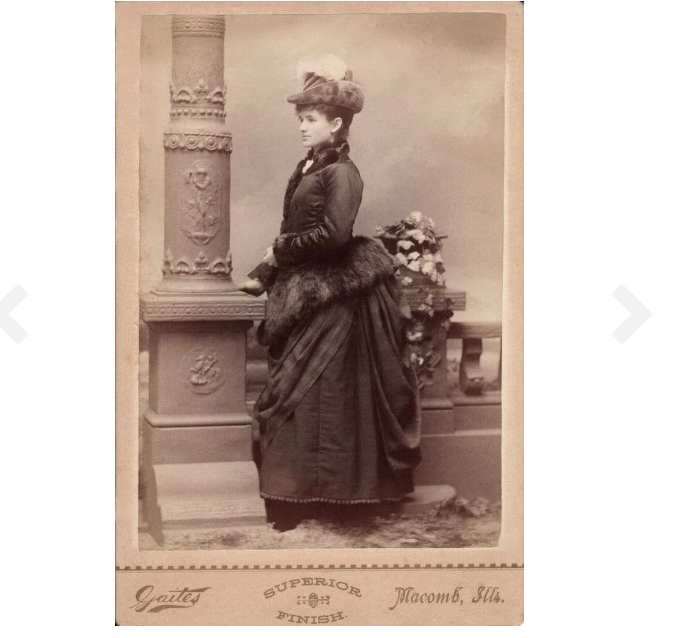
19. Laura B. Gates' Photography Studio
Laura B. Gaites was born in Macomb in 1861. Twenty years later she married H. William Gaites, who soon opened a photography studio in the 200 block of North Randolph Street. She worked with him as the first female photographer in the area, and at that time glossy “cabinet card” photographs were popular. By the 1880s, children were frequently photographed, an indication of the growing attention they were beginning to receive in American culture.
The Gaites studio had several elaborate photographic settings, including one for graduation pictures. Partly for that reason, the Gaites studio was the most successful photography business of that era, and Laura Gaites became a well-known photographer. When her husband died in 1917, she continued in the busi-ness. By the time she died in 1952, she had been a photographer for seventy-one years and, just of children alone she had taken some 35,000 images.
20. Lustron Homes
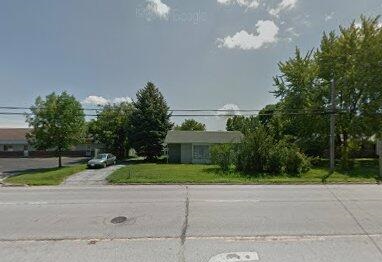
This Lustron Homes Tour highlights a rare chapter of post–World War II American housing innovation, of which Macomb took part in. Developed by the Lustron Corporation under inventor Carl Strandlund, these prefabricated enameled steel homes were designed to be durable, low-maintenance, and modern for returning G.I.s. Although production ended in 1950, more than 2,000 Lustron homes remain today, with several listed on the National Register of Historic Places. Five can be seen in Macomb, right in the heart of Unforgettable Forgottonia.
Visit this link to see more details including addresses and photos of all the Lustron Homes in Macomb.
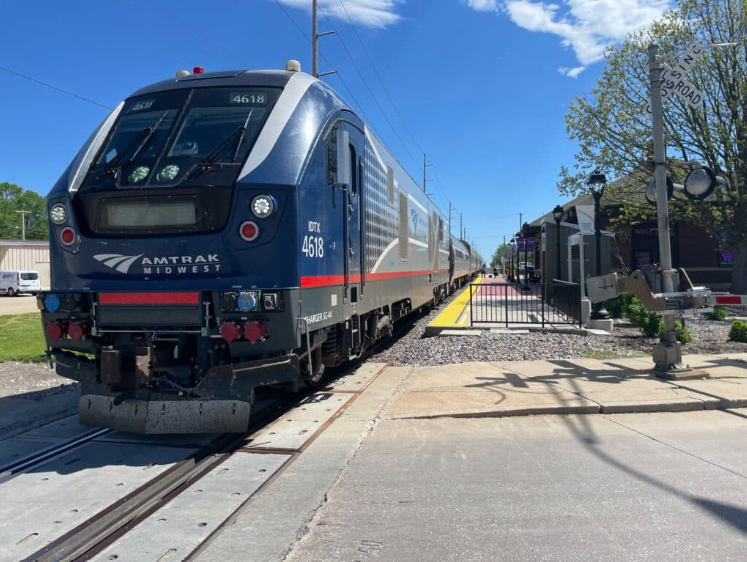
21. Historic Thomas C. Carper Train Depot
Opened in 1913 and designed by architect Walter Theodore Krausch, this beautifully restored brick and sandstone train station remains a vital transportation hub today. Overlooking historic Chandler Park, the depot serves Amtrak’s twice-daily service between Chicago and Quincy and is a central stop for Go West Transit.
The station has seen numerous community-led upgrades, including interior painting by WIU student volunteers and exterior work by local residents. Since 2021, it has also served as the home of the Visit Unforgettable Forgottonia visitors bureau, where travelers can find free regional guides and information.
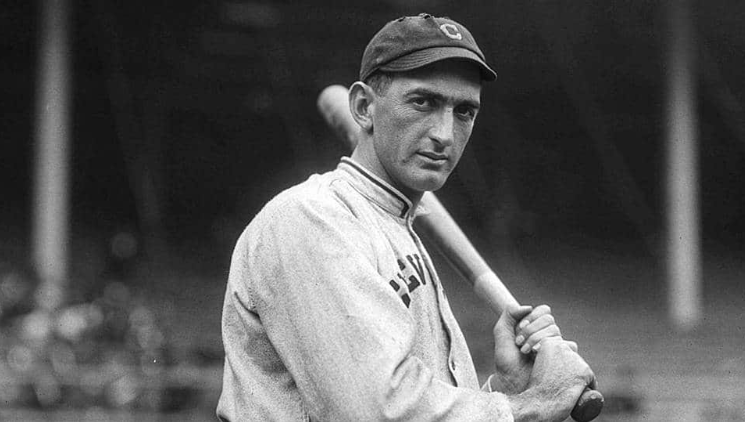
22. Shoeless Joe Jackson & Baseball's “Black Sox” in McDonough County
In 1921, the intense baseball rivalry between Macomb and Colchester culminated in a championship game that felt like a scene from Field of Dreams. While Macomb was the established county seat, the mining town of Colchester had a secret weapon: local bootlegger and Al Capone associate Henry “Kelly” Wagle. Seeking an edge in the decisive fifth game of the series, Wagle used his Chicago connections to recruit ringers from the infamous "Black Sox" scandal, who had just been banished from Major League Baseball for fixing the 1919 World Series.
Just five weeks after the "Trial of the Century," a mysterious car arrived at the Macomb fairgrounds. Out stepped "Shoeless" Joe Jackson—the legendary hitter who set a rookie batting record of .408—along with teammates Eddie "Knuckles" Cicotte and "Swede" Risberg. Despite fierce protests from the Macomb side, the disgraced stars were allowed to suit up for Colchester. Jackson, known for his incredible speed and 400-foot throws, joined his fellow banned teammates to dominate the local competition.
To no one’s surprise, the professional talent proved overwhelming. With the Major League icons on the field, Colchester shut out Macomb with a final score of 5-0. This remarkable afternoon remains one of the most legendary chapters in the history of McDonough County, cementing the region's reputation as "Unforgettable Forgottonia".
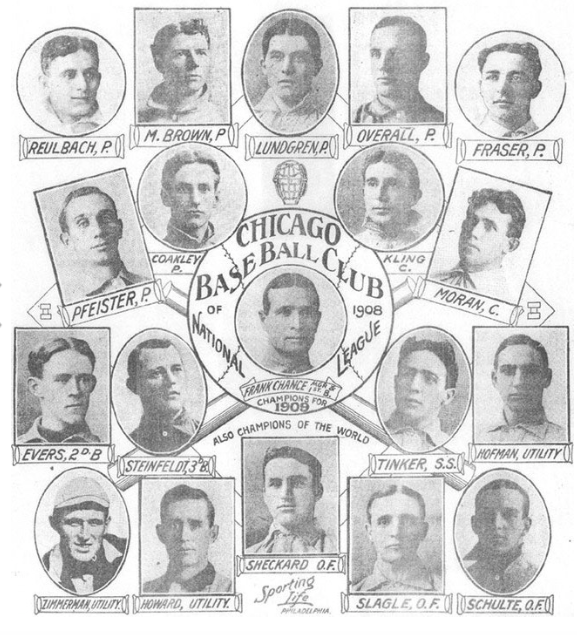
23. When The 1908 World Champion Chicago Cubs Played In Forgottonia
In 1909 and 1910, the reigning World Champion Chicago Cubs traveled to Macomb to play exhibition games against the Macomb Potters, a Class D minor league team. The first matchup in June 1909 was a major event for the region, drawing nearly 3,000 fans who paid a significant $1.00 admission fee to see the Cubs’ regular starting lineup. The Major League stars lived up to their reputation, shutting out the local Potters 6–0 and splitting the substantial gate profits.