Underground Railroad Tour
The Illinois leg of the Underground Railroad ran directly through McDonough County, home of Macomb, IL, its county seat.
Prior to the Civil War, enslaved people in the United States sought their independence by fleeing northward to freedom in Canada. Although the routes taken by freedom seekers varied and stretched across the United States, there was one documented route traversing McDonough County that was part of the Quincy Line of the Underground Railroad. Freedom seekers made their way to this area of Illinois from Quincy on the banks of the Mississippi River and across from the pro-slavery state of Missouri.
As they pursued freedom, abolitionists assisted in transporting freedom seekers through McDonough County via Station No. 3 of the Quincy Line, which included the rural homes of the Allison and the Blazer families. Stations on the Quincy Line leading out of Quincy northward included Mendon (Adams County), Plymouth (Hancock/McDonough County) and Macomb that eventually lead to Galesburg (Knox County) and further north to freedom. This path was utilized in the transportation of more than 200 freedom seekers.
Through the efforts of Visit Unforgettable Forgottonia, the U.S. National Park Service officially recognized the Allison Family Homesite as a part of the National Underground Railroad Network to Freedom. “This program honors, preserves and promotes the history of resistance to enslavement through escape and flight, which continues to inspire people worldwide. Through its mission, the Network to Freedom helps to advance the idea that all human beings embrace the right to self-determination and freedom from oppression.”
Many of the Allison and Blazer families’ graves can found in Macomb‘s historic Oakwood Cemetery and the county’s Camp Creek Cemetery.
Read the full text of D.N. Blazer‘s “The History of the Underground Railroad of McDonough County, Illinois“ to learn more.
The following itinerary outlines stops to visit in Macomb to honor the legacy and history of the Underground Railroad.
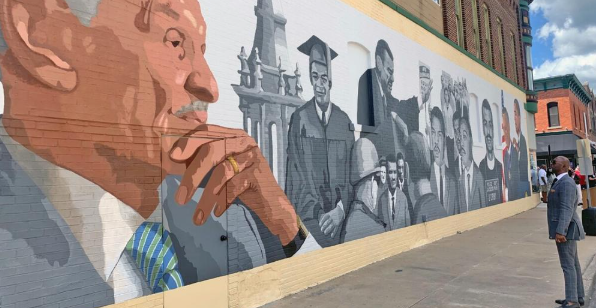
1. Rev. C. T. Vivian: Life of a Servant Leader Mural
In recognition of one of Macomb’s greatest sons, the Macomb Area Convention & Visitors Bureau partnered with C.T. Vivian Project Foundation of Macomb founder and director Byron Oden-Shabazz and artist and former WIU Professor of Art, Michael Mahoney, to honor civil right pioneer Rev. Dr. C. T. Vivian.
At 18 feet high and nearly 75 feet long, Rev. C. T. Vivian: Life of a Servant Leader is McDonough County’s largest mural.
The work, which is displayed on the northern wall of the 135 N Randolph building, depicts Dr. Vivian late in life looking over the course of his storied lifetime from a young man graduating from Macomb High School and Western Illinois University through his varied experiences as a Reverend and leading activist in The Civil Rights Movement.
He worked shoulder to shoulder with Rev. Martin Luther King and lifelong friend Rep. John Lewis to receiving the Presidential Medal of Freedom from Barrack Obama.
The work of C.T. Vivian and other civil rights leaders carries forward the legacy of the Underground Railroad and the abolition movement, continuing the struggle for freedom, justice, and equality across generations.
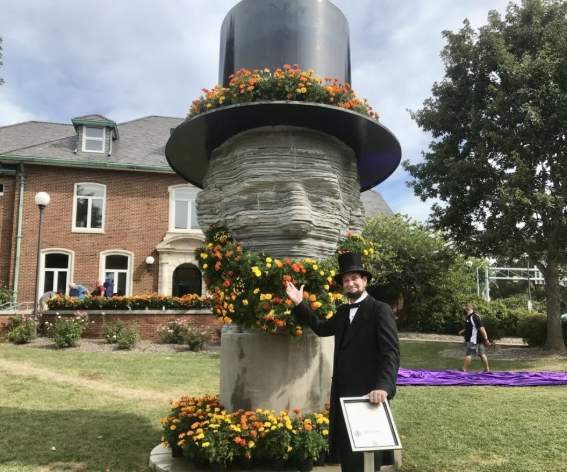
2. Living Lincoln Topiary Monument
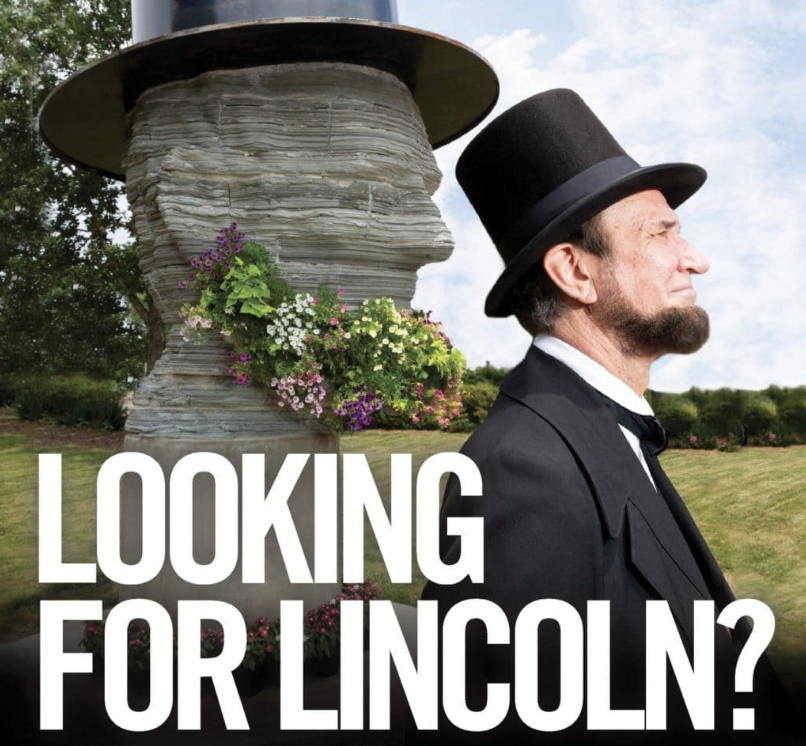
The Living Lincoln Topiary Monument is a 16 foot high by 8 foot wide bust of our 16th President, Abraham Lincoln. It’s mixed media construction of durable cast stone and steel features a unique topiary aspect in which the 16th president’s beard consist of real living flowering plants and greenery, making it the only sculpture of its kind in the world!
The monument was designed as the centerpiece of Unforgettable Forgottonia‘s Looking For Lincoln Self-Guided Tour, which illustrates Abraham Lincoln‘s long and significant connection to Macomb and McDonough County.
As President of the United States, Abraham Lincoln was monumental in the fight to end slavery in the nation. His most significant steps toward ending the institution were the Emancipation Proclamation and his support for the 13th Amendment. Lincoln's presidency (1861-1865) coincided with the later years of the Underground Railroad's operation, and his Emancipation Proclamation in 1863 marked a turning point in the fight for freedom.
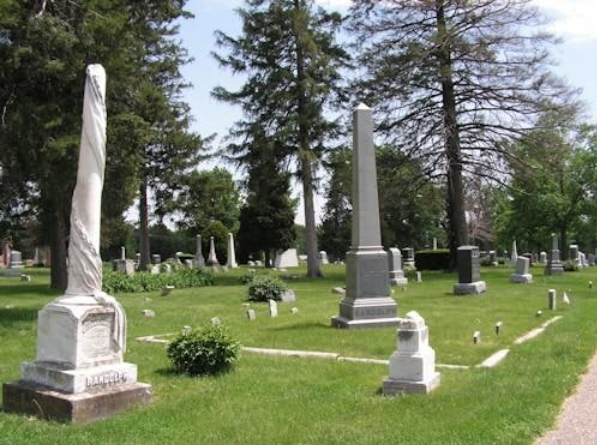
3. Oakwood Cemetery
Created in 1857, Oakwood Cemetery is remarkably historic. Its founder, William H. Randolph, a former sheriff and state legislator, was the leading Abraham Lincoln supporter in McDonough County. And on two occasions Honest Abe stayed at his Macomb hotel, The Randolph House. With 14,000 burials, Oakwood is by far the largest cemetery in McDonough County.
Oakwood was a celebrated burial place for Civil War soldiers. There are over 300 graves of men who served in that nation-redefining war.
Among the many noted graves are those of early county organizers and Macomb founders James Clarke and James Campbell; several Underground Railroad conductors in the Allison and Blazer families; noted business leaders and community activists like C. V. Chandler and Mary Ewing; crusading humanitarians Rose Jolly and Josie Westfall; early bacteriologist Ruth Tunnicliff, who developed the first inoculation for measles; Western Illinois University presidents Alfred Bayliss, Walter P. Morgan, and Dr. Frank Beu; noted Leatherneck coaches Ray “Rock” Hanson and LeRoy “Stix” Morley—to name but a few.
The Oakwood Cemetery is one of 10 sites that gave McDonough County Abraham Lincoln National Heritage Area status and can be visited as part of Macomb‘s Looking For Lincoln Self-Guided Tour.
4. Camp Creek Cemetery
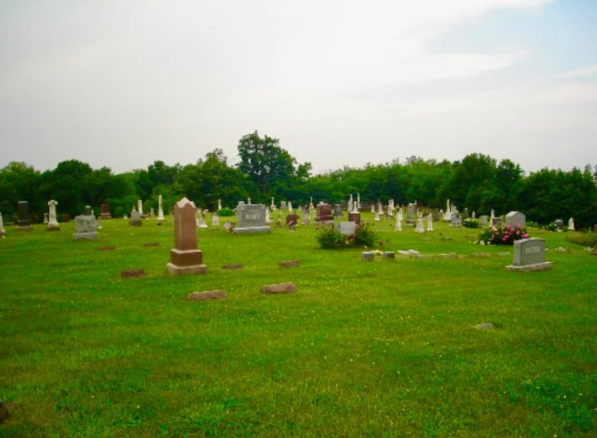
Many of the Allison and Blazer families’ graves can also be found in McDonough County's Camp Creek Cemetery, which was established in 1832 (just a few decades before the Underground Railroad reached its peak). Pay a visit to honor these fiercely brave civilians, who put their lives at risk to assist families and individual traveling through the Underground Railroad to freedom.
5. Looking for Lincoln Self-Guided Tour
Through the Looking For Lincoln offices in Springfield, IL and the U.S. National Parks Service, Macomb celebrates it’s designation as an Abraham Lincoln National Heritage Area by way of it’s Looking For Lincoln Self-Guided Tour. This unique attraction allows users to experience 10 significant sites throughout Unforgettable Forgottonia‘s Macomb and McDonough County directly related and pertaining to Abraham Lincoln, his remarkable connection to this Forgottonia community, and his contributions to the Civil Rights Movement.
Individual markers designate every one of the 10 Macomb Looking For Lincoln sites, which include specific QR codes that direct history seekers to detailed, online information on the particulars of each notable location, featuring in depth history, photos, maps and video of “Abe Lincoln” himself giving “first hand” descriptions of the sites.
The LFL marker tour includes the The Living Lincoln Topiary Monument, McDonough County Courthouse, The Randolph House, Oakwood Cemetery, The Blandin House Museum, Civil War Monument, The Wm. Painter Pearson Photography Studio site, as well as other significant area Lincoln historic sites.
Find a printable brochure for our Looking For Lincoln Self-Guided Tour and Living Lincoln Topiary Monument here.
6. Freedom’s Trail: Underground Railroad in McDonough County
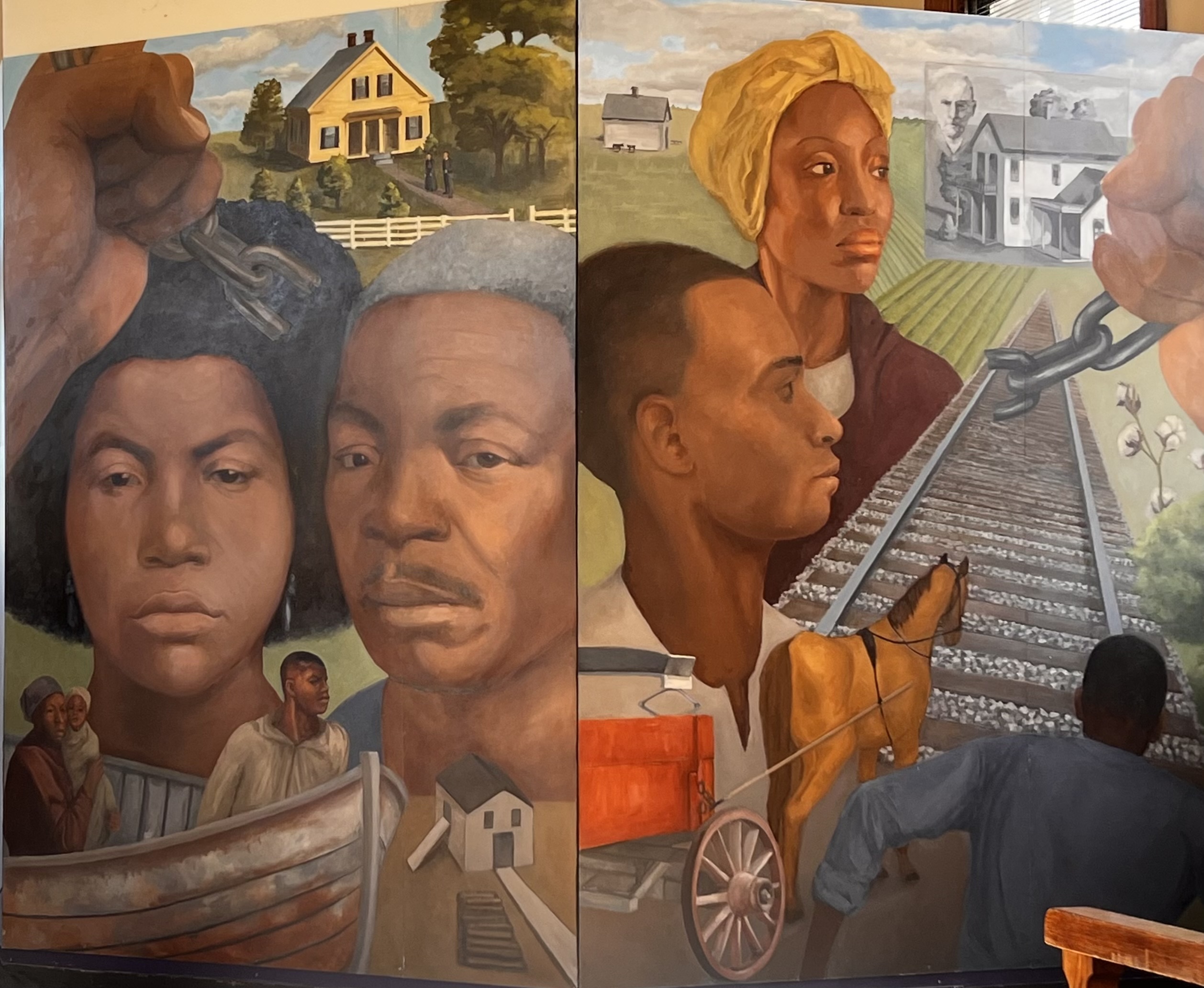
A new mural at Macomb Amtrak Station, which was unveiled on November, 7 2025, honors local Underground Railroad history and the bravery of freedom seekers and their supporters in the region. The mural, created by renowned local artist and Western Illinois University Professor Emeritus Michael Mahoney, will honor the stories of freedom seekers who passed through Western Illinois on their way to freedom in Canada.
The mural is painted on large masonite panels and features imagery of local families—such as the Blazers and the Allisons—whose homes served as safe havens for those escaping slavery. The local train station was chosen for the mural because, by the mid-1800s, many freedom seekers stowed away on trains through Macomb, making it a powerful setting to tell this story.
7. Macomb Area Convention & Visitors Bureau
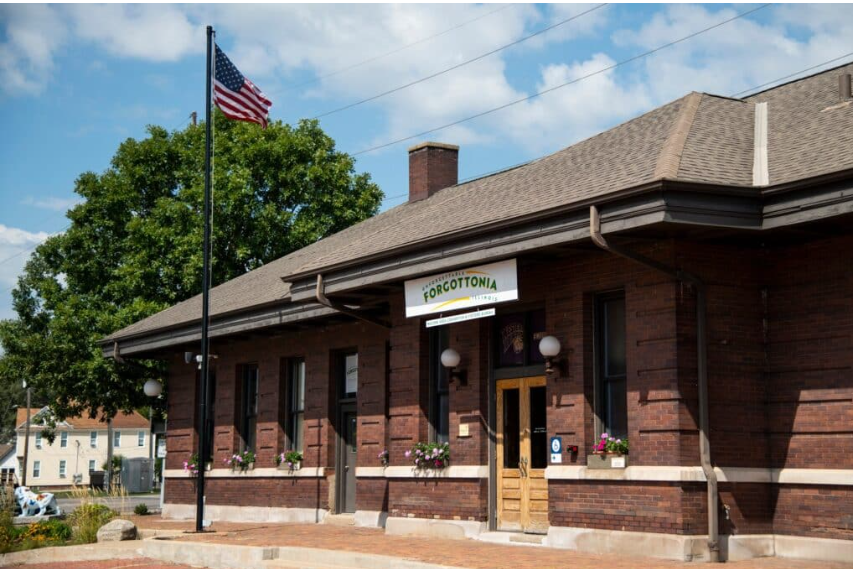
Located in the historic Macomb Railroad Depot, Visit Unforgettable Forgottonia aka the Macomb Area Convention & Visitors Bureau (MACVB) promotes events and attractions for the leisure and business travelers. As host and curator of this site, the MACVB also provides information and resources which assist travelers in making their visit to Forgottonia Unforgettable. Stop in for a National Parks Passport Stamp for the Underground Railroad.