Looking For Lincoln Tour
Explore the Looking for Lincoln Tour sites in Macomb and McDonough County!
Step back in time on this self-guided tour to take a historic journey and experience Abraham Lincoln's local impact at 10 significant historic sites throughout Unforgettable Forgottonia, Macomb, and McDonough County.
Individual markers designate every one of the 10 Macomb Looking For Lincoln sites, which include specific QR codes that show a video of “Abe Lincoln” himself giving “first-hand” descriptions of the historical sites.
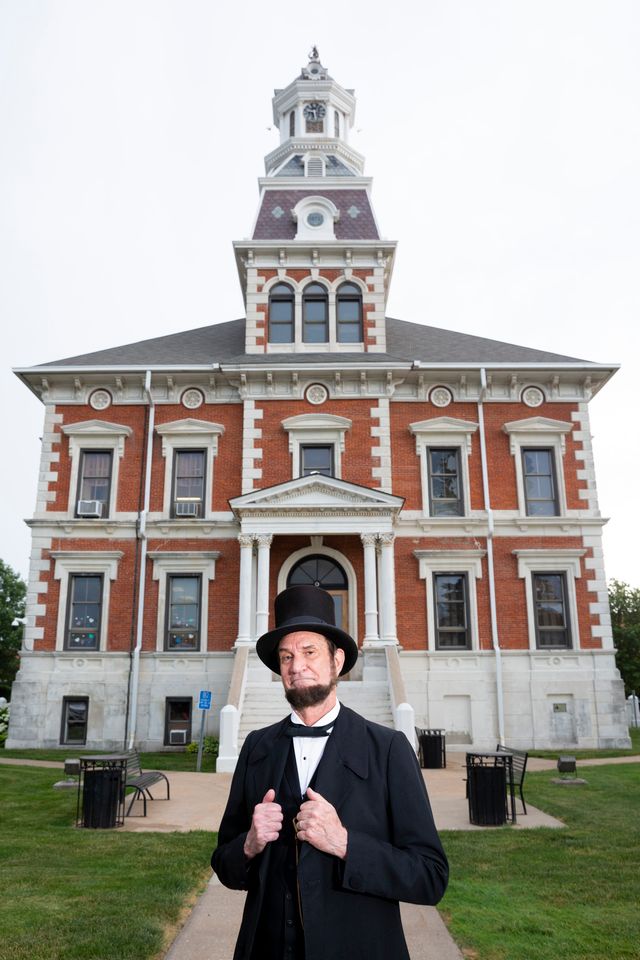
1. McDonough County Courthouse
On the evening of August 25, 1858, Abraham Lincoln spoke to an audience that filled the Macomb courthouse. A newspaper reported that Lincoln delivered his remarks in a relaxed manner, and that “his speech was more like an earnest conversation with his Old Whig friends.”
On October 25, 1858, Lincoln returned to Macomb, just ten days after the final Lincoln-Douglas Debate in Alton. After checking into the Randolph House on a rainy Monday at 2:00 PM, Abraham Lincoln gave a speech to a crowd of more than 4,000. Despite the weather, Lincoln addresses the masses and a local newspaper reported “[The crowd] stood there in the mud, and fog, and drizzle through his whole speech.”
🎩 Hear from Abraham Lincoln about his original appearance in 1858 at the McDonough County Courthouse here and his return visit two months later here.
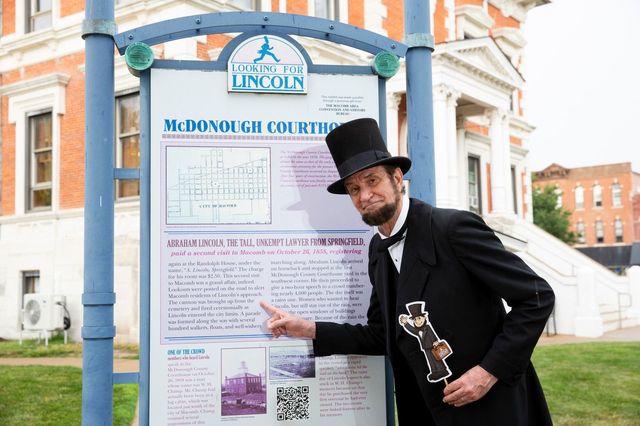
2. Looking For Lincoln Wayside Exhibit
The Looking For Lincoln Wayside Exhibit tells the story of then senate candidate Abraham Lincoln’s stays in Macomb. The story illustrates a momentous discussion Lincoln had with Joseph Medill, co-owner and managing editor of The Chicago Tribune and Mayor of Chicago 1971-1873, and James Magie, owner of the Macomb Journal and father of Elizabeth "Lizzie" Magie (inventor of the board game Monopoly).
Their conversation took place at The Randolph House Hotel and had a significant impact on Lincoln‘s impending political career – and ultimately, his future in becoming President of the United States.
🎩 Hear from Abraham Lincoln about these conversations and the Looking For Lincoln Wayside Exhibit here.
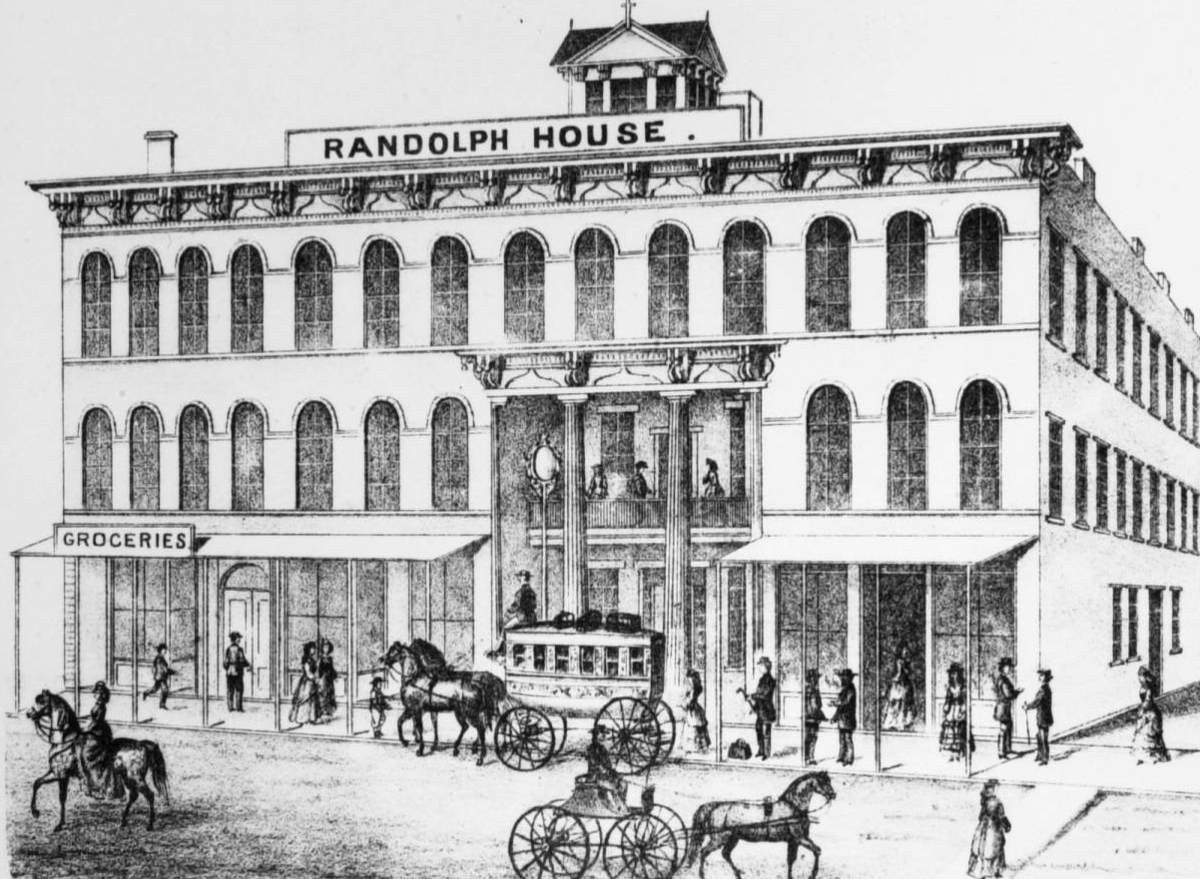
3. The Randolph House Hotel
The Randolph House Hotel was built in 1857 by William H. Randolph, a prominent businessman in Macomb. The hotel was known for its unrivaled elegance. Guests were met at the curb and their horses were taken to a nearby stable, bellhops carried their luggage and ran errands for them, and transportation was provided to and from the newly built train station.
Randolph was the county’s leading Republican, giving him the opportunity to entertain and meet with Lincoln during his visits to Macomb. Lincoln stayed in the Randolph House on two occasions in 1858 – on Wednesday, August 25 and Monday, October 25 – following speeches ahead of his Presidential appointment. After the President’s assassination, the room became a local Lincoln shrine.
This building was, in earlier times, the finest hotel in Illinois between Chicago and Quincy. During the campaign of 1858, Abraham Lincoln was a guest here on at least two separate occasions.
🎩 Hear from Abraham Lincoln about his stay at The Randolph House Hotel here.
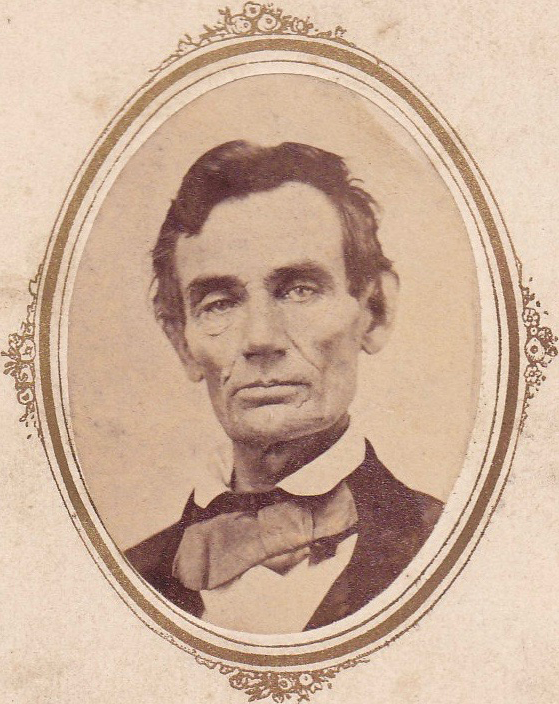
4. Abraham Lincoln Portrait
William Painter Pearson took an ambrotype image of Abraham Lincoln in Macomb.
Ambrotypes were made on a glass plate coated with a wet, light-sensitive substance, which when developed and dried, produced a negative image. The negative then had to be mounted against a dark background or coated with a dark varnish to give the illusion of a positive.
Lincoln stopped in Macomb during the period of his seven "Great Debates" with Stephen Douglas. Pearson is the only photographer in Macomb to take Lincoln’s portrait.
In 1858, Pearson moved to Macomb from Centerville, Butler County, Pennsylvania, where Pearson then established his photography studio. The studio was on the second floor of a building on the southeast corner of the Courthouse Square, where now stands the Citizen’s Bank. He is buried in Oakwood Cemetery, Macomb.
🎩 Hear from Abraham Lincoln about his ambrotype portrait here.
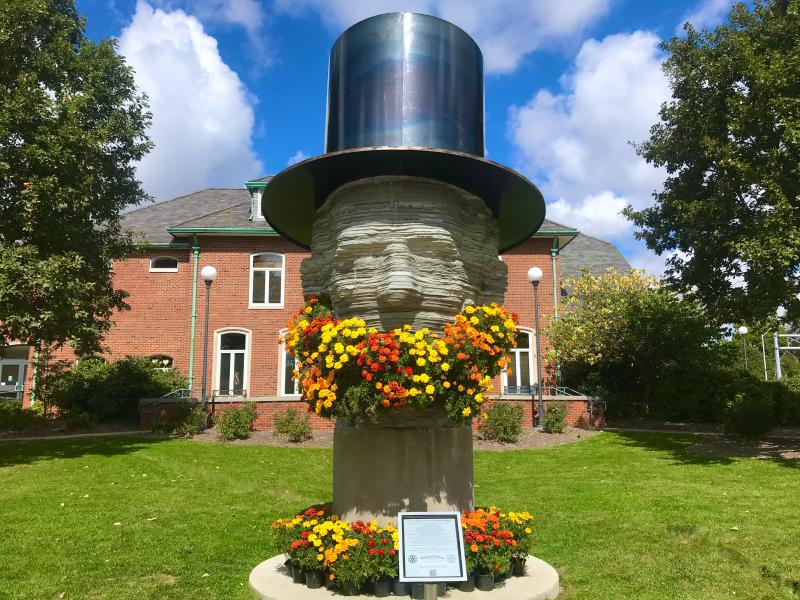
5. Living Lincoln Topiary Monument
The Living Lincoln Topiary Monument is a 15-foot high and 8-foot wide sculpture constructed of cast stone and steel. Most interestingly, this work features a unique topiary aspect in which the 16th president’s beard seasonally consists of flowers and greenery, making it the only sculpture of its kind in the world.
The concept was created by Western Illinois University faculty member “Duke” Oursler and Macomb Area Convention & Visitors Bureau Executive Director Jock Hedblade in cooperation with the City of Macomb and Mayor Mike Inman as a unique and modern way of representing our Lincoln Story. The project was funded in 2020 by the Rotary Clubs of Macomb in recognition of their 100th anniversary.
🎩 Learn more about the Living Lincoln Topiary Monument from Abraham Lincoln here.
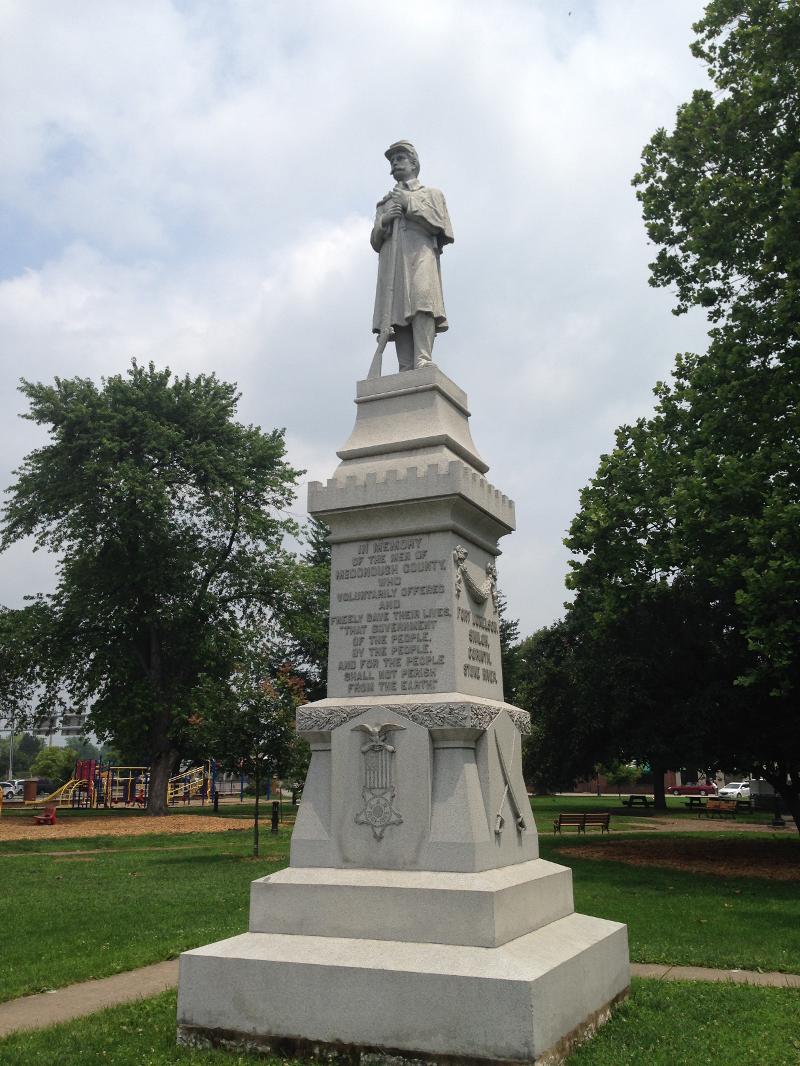
6. Chandler Park Civil War Monument
In 1899, Civil War veteran and prominent local businessman C.V. Chandler had a memorial statue to the county’s Civil War soldiers erected in the downtown park that now bears his name. The 20-foot-high monument portrays a Civil War soldier at rest. It was dedicated on August 3, 1899.
🎩 Hear from Abraham Lincoln about the history of the Civil War and the Chandler Park Civil War Monument and its dedication in Macomb here.
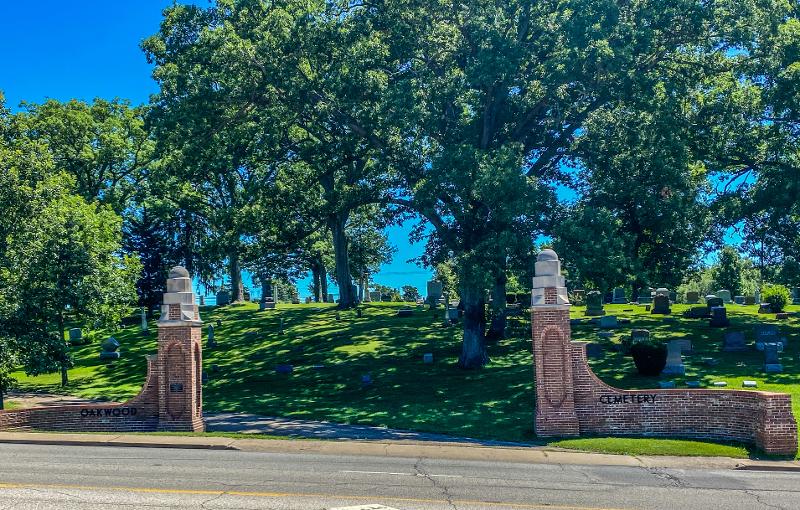
7. Historic Oakwood Cemetery
The historic Oakwood Cemetery was developed by William H. Randolph in 1857 on land settled by his wife's family, the Brookings, in 1834. It was laid out by surveyor Charles Gilchrist, later a Civil War Colonel and Brevet Brigadier General.
Oakwood includes the graves of several hundred veterans as well as notable local figures from every generation, from Macomb founders, civic leaders, Underground Railroad conductors, WIU faculty members, and social activists.
Take a self-guided tour of the Oakwood Cemetery to visit the graves of influential leaders who made an impact on Macomb here.
🎩 Learn more from Abraham Lincoln about the Oakwood Cemetery and those buried on the grounds here.
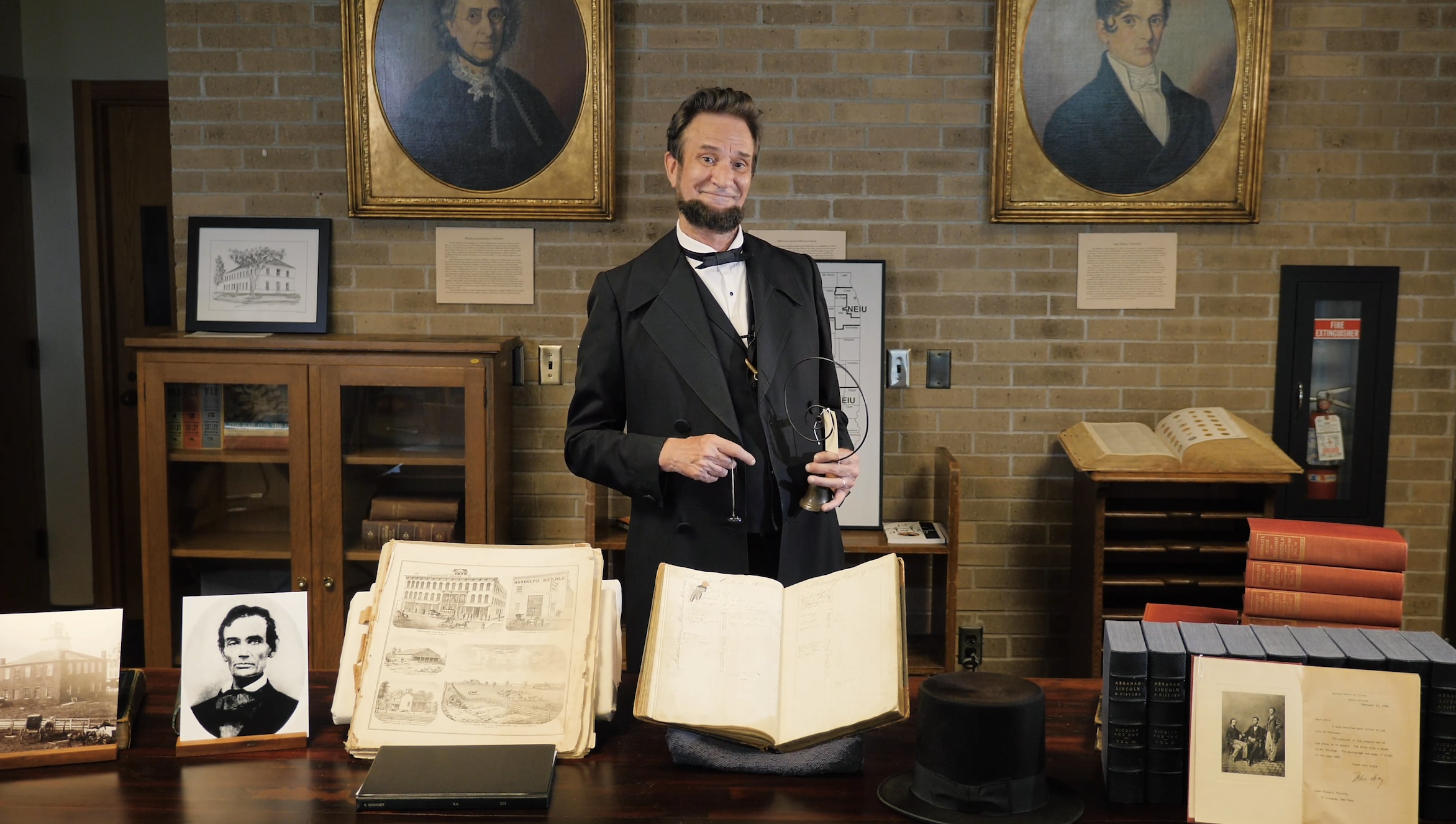
8. Malpass Library Archives
The Western Illinois University Malpass Library Archives & Special Collections house artifacts pertaining to and of the Lincoln era. Key artifacts include the Randolph House Hotel guest bell, the Randolph House Hotel guest registry (in which Lincoln signed twice), and an ambrotype image of Lincoln taken by Macomb photographer William Painter Pearson.
The Archives and Special Collections unit of Leslie F. Malpass Library at WIU has not only a remarkable Lincoln collection, and various microfilmed Illinois newspapers from the Lincoln era, but has collections related to such figures as Lincoln’s presidential secretary John Hay and noted Lincoln historian Carl Sandburg. So, for those with an interest in Lincoln, and his world, Macomb is a great location for historical inquiry and research.
The library and its archives are open Monday-Friday 8:00 a.m. - 4:30 p.m. and are closed on University holidays.
🎩 Hear more about the Malpass Library Archives from Abraham Lincoln here.
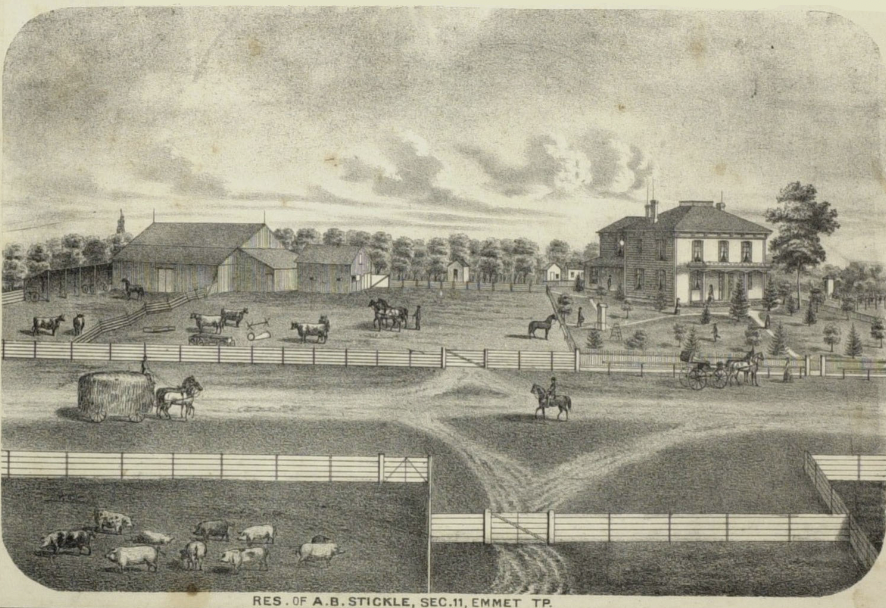
9. Stickle Half-Way House
In 1840, Abram Stickle built a two-story frame house on Emerson road north of Macomb, right on the most important route in early McDonough County – Burlington Road (now Emerson Rd.). The Stickle Farm was, in fact, half way between Beardstown on the Illinois River and Burlington on the Mississippi River.
Stickle invited travelers, especially livestock drivers, to camp on his property – which soon became known as "Half-Way Farm." Local folks knew that Lincoln passed along the old Burlington Road with his military company (of which he was captain) in 1832, heading north for the Black Hawk War, and apparently again in 1858, when he was campaigning for the senate.
There are old now hard-to-find Lincoln markers near the site, including a sign carved into a local cement road fixture, not far from the farm, that says, "Abraham Lincoln's Route 1832 and 1858." Stickle tore down his original 1840 house and built a new one in 1866, which still stands at the location today.
🎩 Learn more about the history of the Stickle Half-Way House from Abraham Lincoln here.
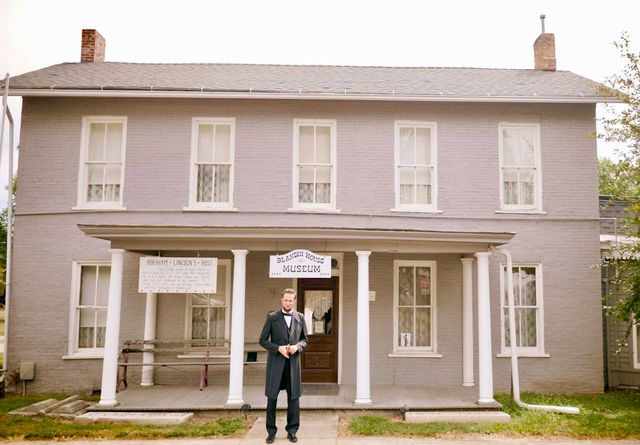
10. Blandin House & Blandin House Museum
The Village of Blandinsville was a bustling place in the 1850. The town once hosted Abraham Lincoln and, today, the Blandin House Museum pays honor to this very visit.
In October of 1858, as Lincoln was stumping throughout Illinois for a seat in the State Senate and in between debating Stephen Douglas, he stayed with postmaster, businessman, and fellow lawyer, Charles R. Hume and his wife, Harriett Blandin. The Hume home sat on Main Street, just over 600 ft. west of the Blandin House. It was destroyed by fire on August 21, 1914.
On May 16, 1970, a group of concerned citizens bought the vacant brick house on the east side of the village park and started a museum to honor founding father, Joseph Blandin and his family. Over the years, the Museum has added many artifacts from the history of Blandinsville.
The Blandin House Museum is located on Chestnut Street, west of the Blandinsville village park.
🎩 Learn more from Abraham Lincoln about the Blandin House and the Blandin House Museum here.