America 250 Trail
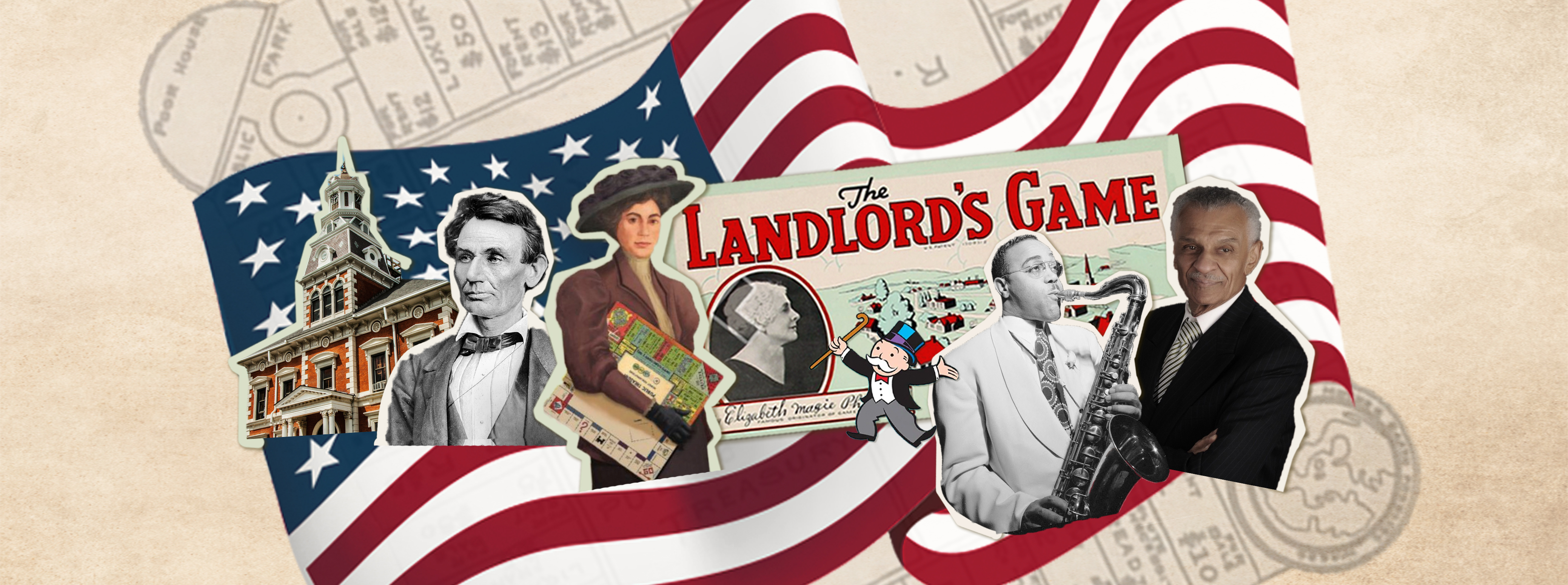
Visit Unforgettable Forgottonia - Where America's Roots Run Deep. Dive into the heart of history and heritage where America's past comes to life in Macomb, IL. Explore the stories, people, and places that shaped our nation's character and continue to inspire future generations. From Lincoln's legacy and Monopoly's foundation to Rock & Roll's roots, experience America's legacy in Macomb. Play the world's largest Monopoly game, explore historic landmarks, and savor small-town charm while you're here.
1. McDonough County Courthouse
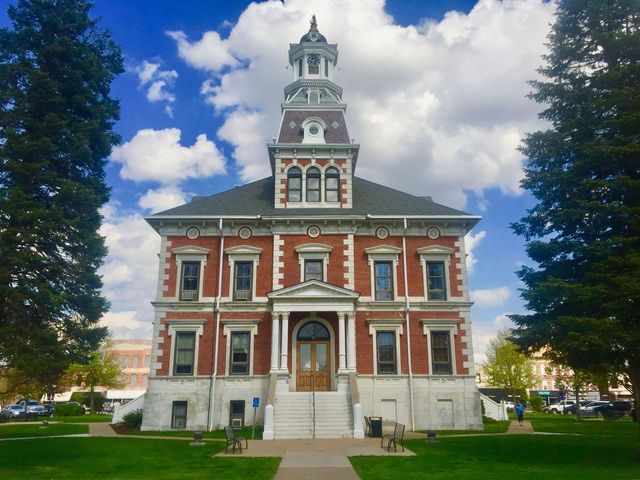
Start your American history tour in the heart of Macomb at the McDonough County Courthouse. The historic McDonough County Courthouse is located in the McDonough County seat city of Macomb, Illinois.
McDonough County’s first courthouse was built of logs in 1831 and cost $69.50. It was located at the northeast corner of the square. The second courthouse was built in 1835 and stood on the same grounds as the current courthouse. It was two stories and had a stone foundation, was made of brick with a cupola that sat in the center of the building. In 1858 an ambitious politician by the name of Abraham Lincoln spoke to members of the community from the Courthouse on two separate occasions, one of them in the pouring rain to a crowd of more than 4,000 spectators.
The current courthouse was constructed in 1871. Noted governmental architect Elijah E. Myers designed the building in the Second Empire style and the courthouse is one of the few remaining buildings of its type in the county.
The building houses the County Clerk, Treasurer and State’s Attorney’s Office among others. The courthouse was added to the National Register of Historic Places in 1972. In the late 1970s, the county rehabilitated the building to restore its original exterior.
Established in 1830, McDonough County is named for Commodore Thomas McDonough who led a successful battle against the British on Lake Champlain in the War of 1812.
The McDonough County Courthouse is one of 10 sites that gave McDonough County Abraham Lincoln National Heritage Area status and can also be visited as part of Macomb‘s Looking For Lincoln Self-Guided Tour.
2. Macomb Area Convention & Visitors Bureau
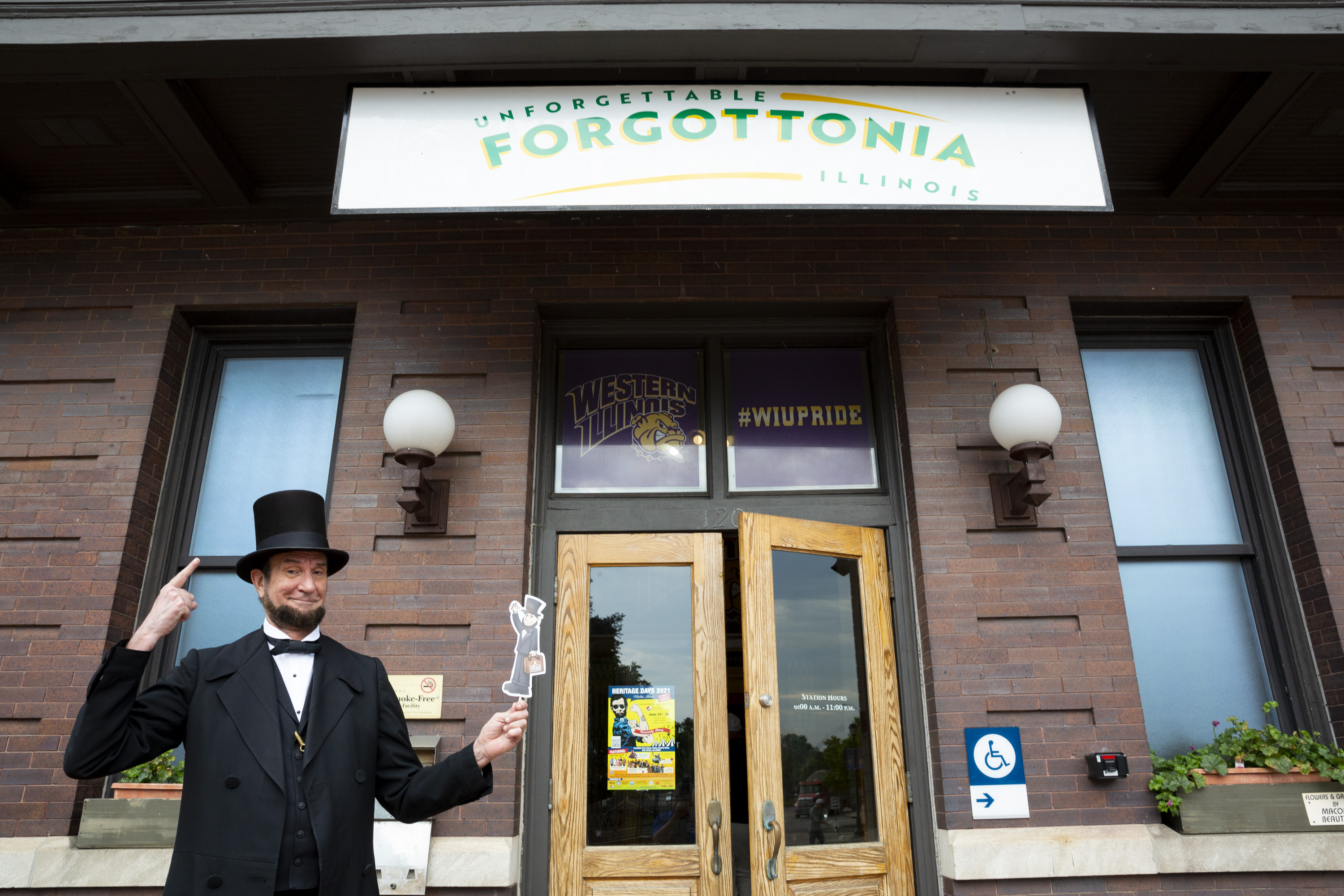
For a bit more local knowledge or any questions during your stay, head to the Macomb Area Convention & Visitors Bureau located in the Macomb Historic Train Depot. Whether you need a map, brochures, or just a friendly recommendation, this spot will have all the info you need to make your visit even better.
Before or after your game of Macombopoly, swing in to pick up some Macombopoly swag (t-shirt, socks, hats, and more) and learn more about what to see and do in and around Unforgettable Forgottonia.
Also, stop in for a National Parks Passport Stamp for the Underground Railroad.
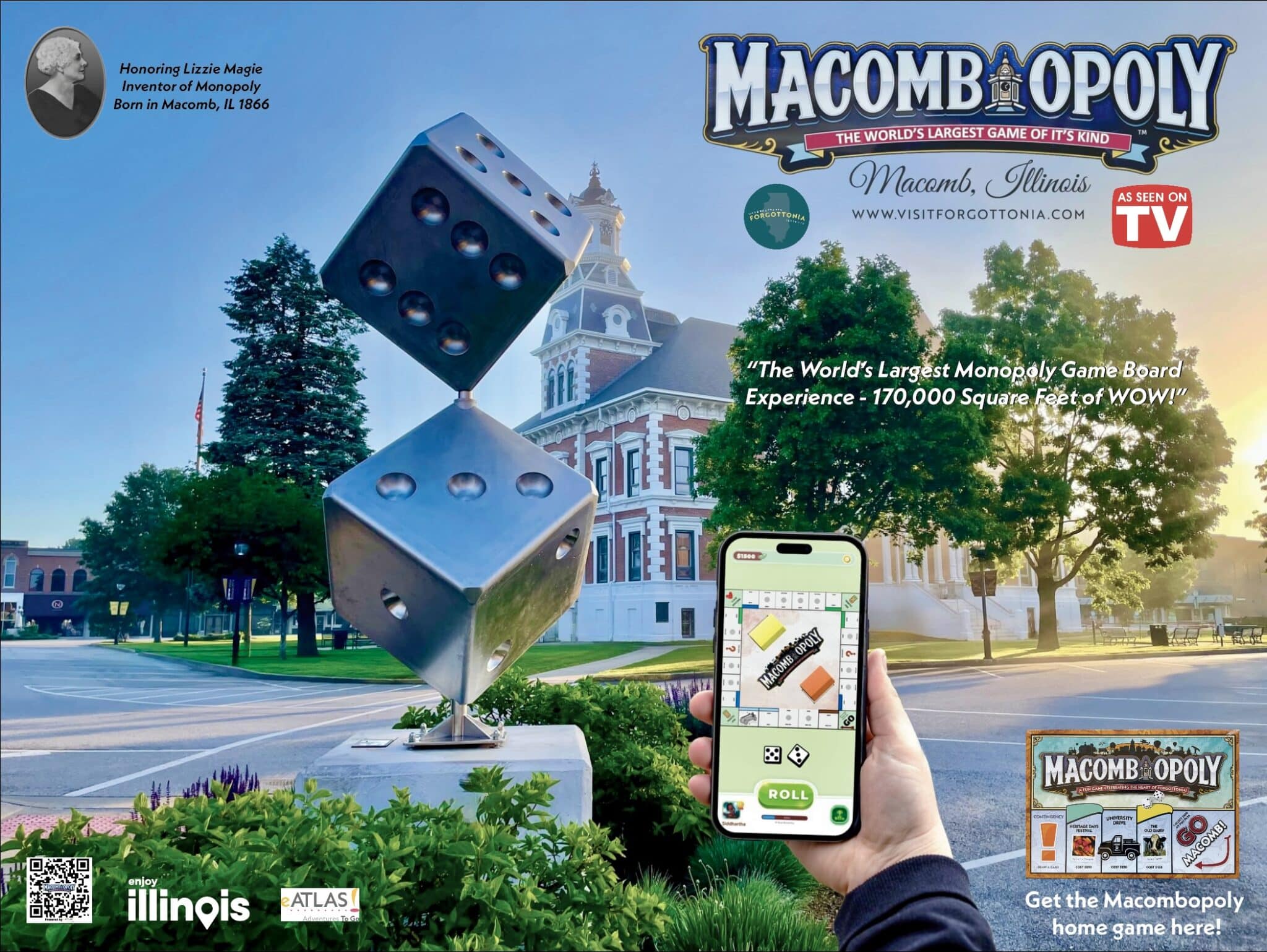
3. Macombopoly: The World’s Largest Monopoly Game
Macombopoly transforms Macomb’s Historic Courthouse Square into a life-size, Monopoly-inspired game board that celebrates both the classic game and its roots in Macomb. Designed in honor of local resident Elizabeth “Lizzie” Magie-Phillips — creator of The Landlord’s Game, which later became Monopoly — the attraction brings her early 1904 board design to life right where its history began.
Players use a state-of-the-art eATLAS mobile app to walk the giant board around the Square, which mirrors Magie’s original layout, even down to the corner where she placed the Jail square, aligning with the historic location of the Macomb Jail. Surrounding the Courthouse lawn are oversized game pieces, including giant spinning dice, Abraham Lincoln’s iconic stovepipe hat, a hybrid Monopoly/Landlord’s Game board, and a life-size sculpture of Lizzie herself, all created by artist Gabe Stevens.
Free and open to the public 24/7, year-round, Macombopoly offers an interactive way to explore downtown Macomb while honoring a groundbreaking local inventor. Download the free app on eATLAS and start the adventure.
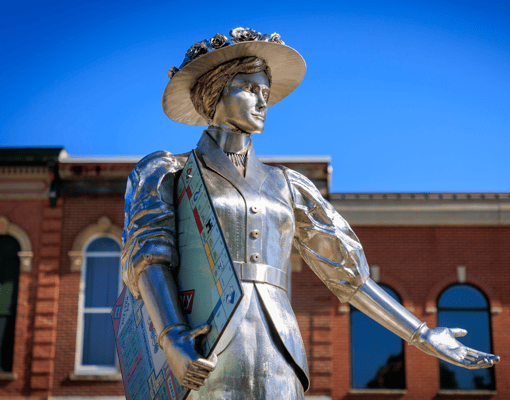
4. Elizabeth "Lizzie" Magie Sculpture
Four stainless steel Macombopoly statues stand tall in the corners of the Historic Macomb Courthouse Square.
This statue of Elizabeth “Lizzie” Magie celebrates the unwavering legacy of the woman who invented the most popular gameboard in the world: Monopoly.
The actress, writer, poet, pioneering feminist, and inventor was born in Macomb, on May 9th, 1866, the year after the Civil War ended and Abraham Lincoln was assassinated. Her father, James K. Magie, was a newspaper publisher and an abolitionist who accompanied Lincoln as he traveled around Illinois in the late 1850s.
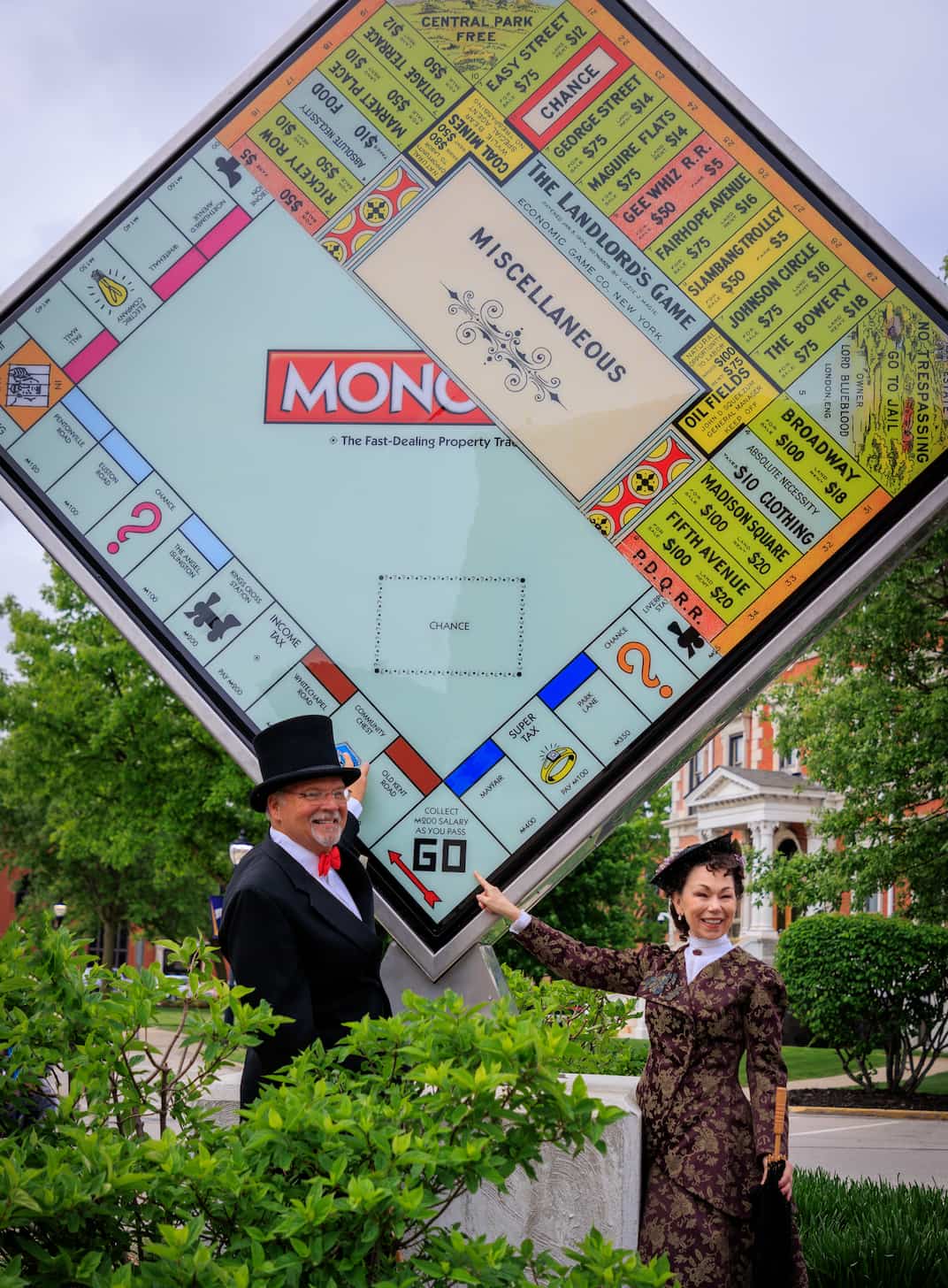
5. Monopoly and Landlord's Game Sculpture
The second of four Monopoly-themed statues around the square is the Landlord's Game and Monopoly sculpture – an ode to Lizzie's original invention.
“The Landlord’s Game” which eventually became known as the game of “Monopoly”, was invented by Lizzie in 1903. She filed a legal claim for the game which, three decades later, became what we know as the Monopoly board game today.
The layout of the original board game and Monopoly is surprisingly similar to that of Macomb’s Downtown Square -in one corner was the Poor House and the public park and across the board was the jail.
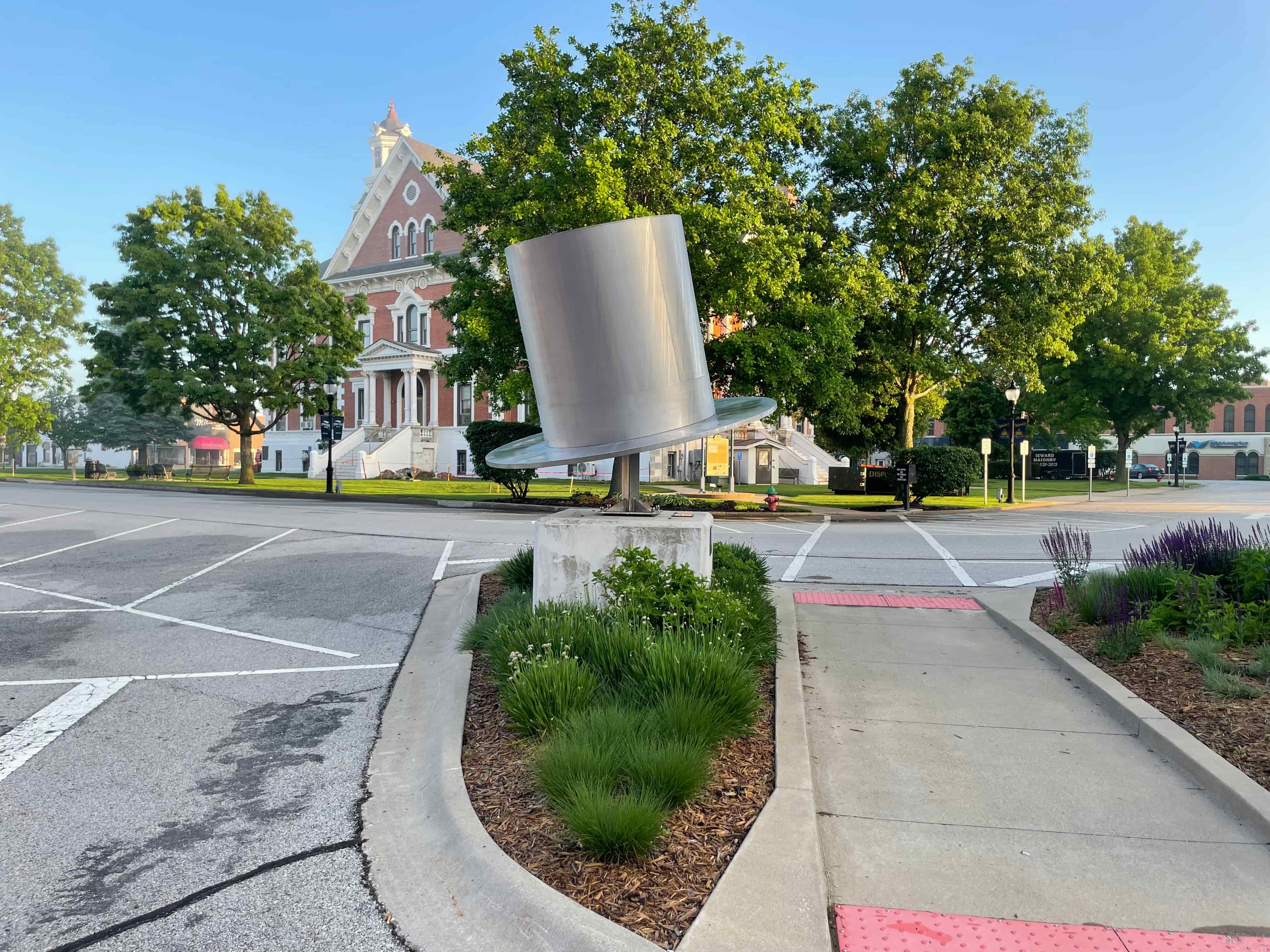
6. Lincoln Top Hat Sculpture
The third Macombopoly sculpture tips its hat to Abraham Lincoln himself. The larger-than-life top hat represents the impact and legacy of Abe Lincoln in Macomb.
A friend of Lizzie Magie's father, James K. Magie, Abraham Lincoln made several stops in Macomb to speak to the public during his Presidential campaigning in 1858.
To learn more about Abe Lincoln's journey through Macomb, take the ten-site Looking For Lincoln Self-Guided Tour in and around town.
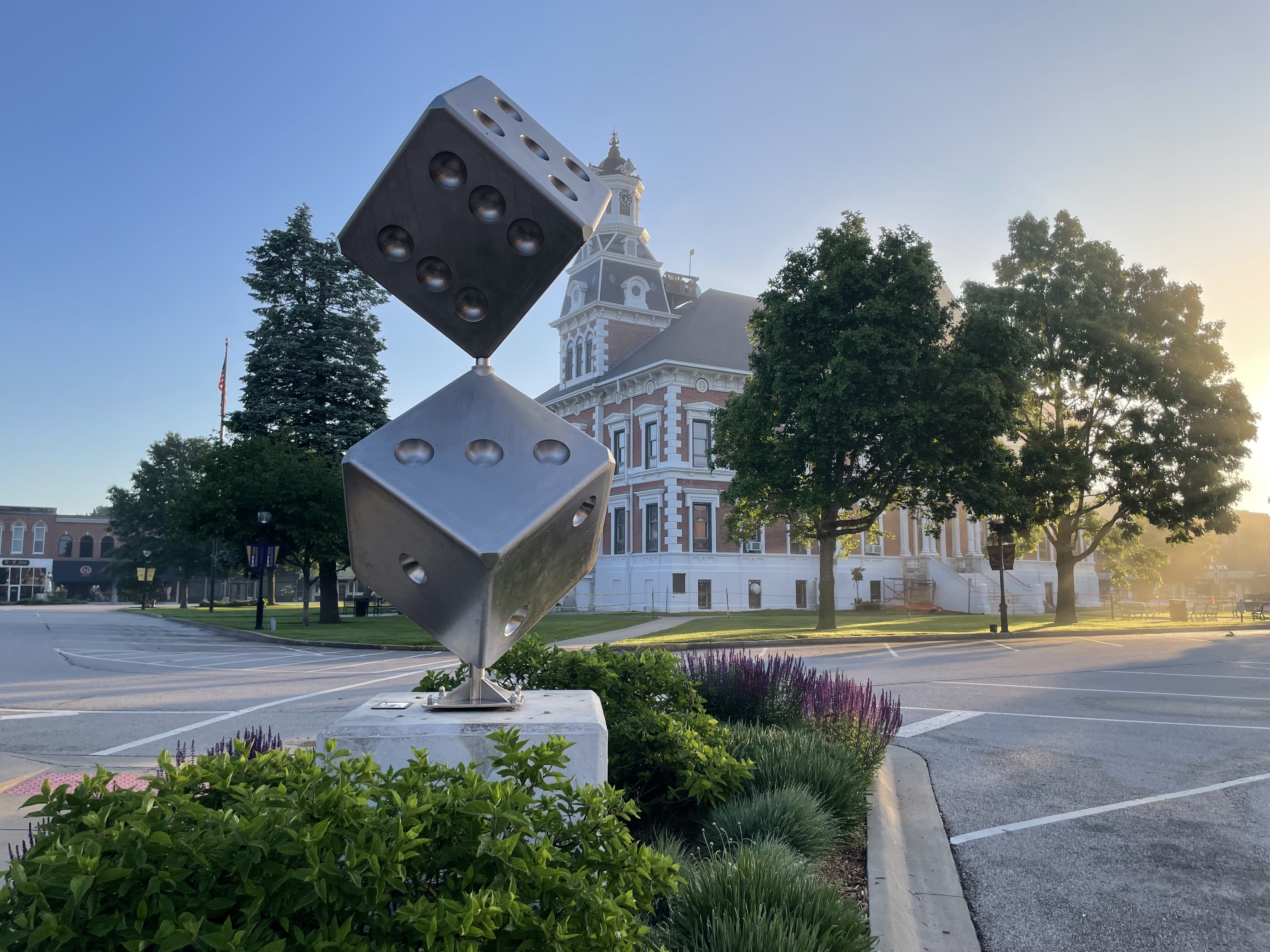
7. "Roll the Dice" Sculpture
The fourth statue on the square lets you "Roll The Dice" with a spin of this interactive sculpture.
Spin these massive dice, just as you do in the real game of Monopoly. While you play Macombopoly, you'll have the chance to roll digital dice within the Macombopoly App as you make your way around town, completing all the stops.
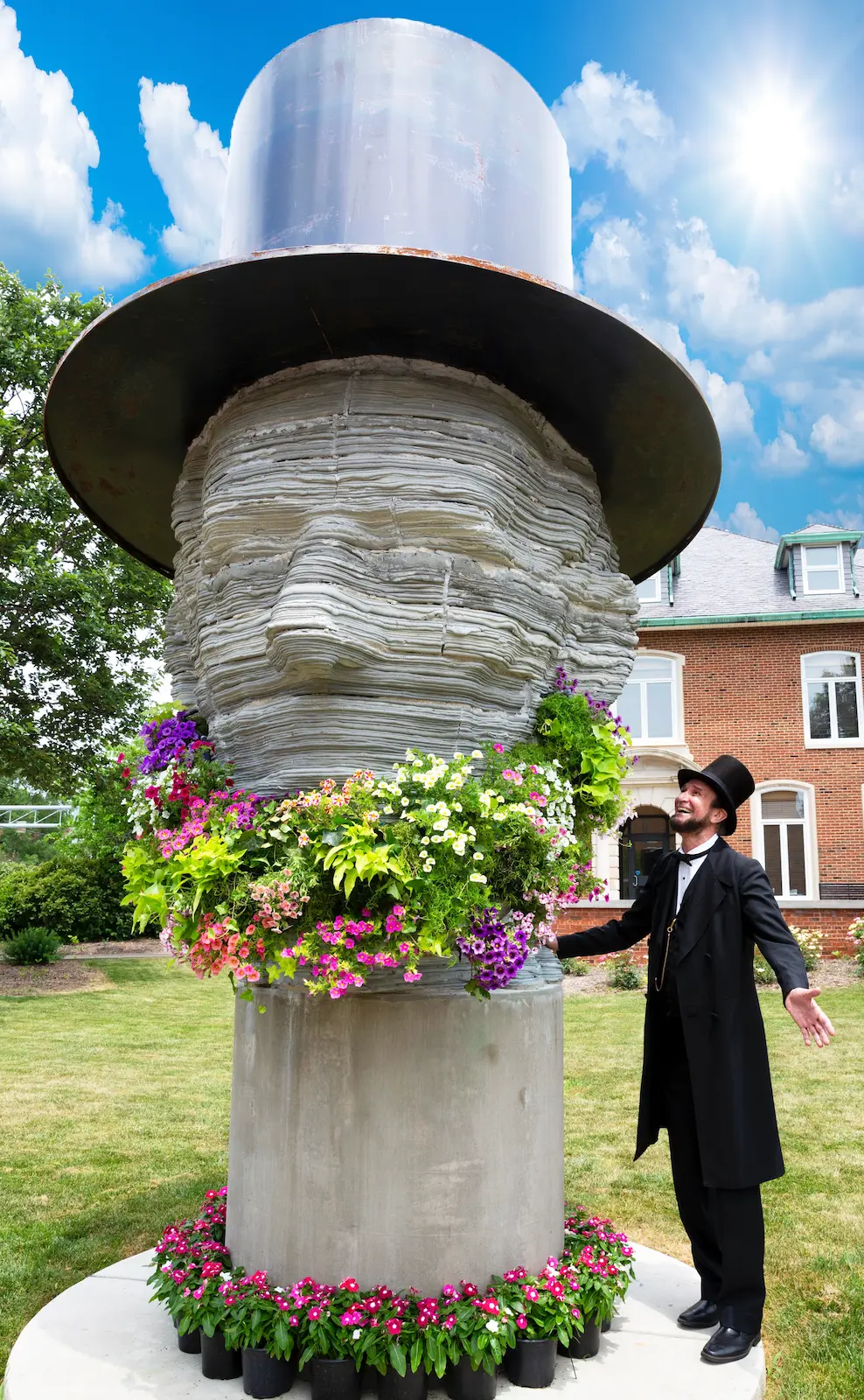
8. Living Lincoln Topiary Monument
You'll stop by this massive, living sculpture as you play Macombopoly – or you can swing by on your own time too!
The Living Lincoln Topiary Monument is a 16-foot high by 8-foot wide bust of Abe Lincoln with a living beard of foliage that changes throughout the season.
Learn more about Abraham Lincoln's local legacy in Macomb here.
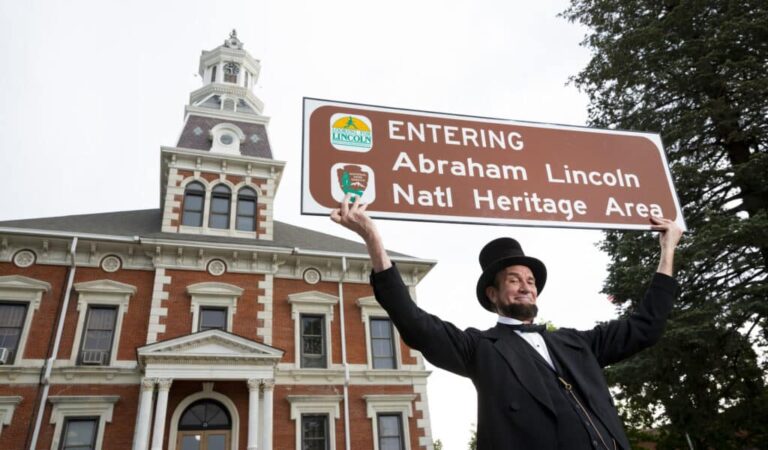
9. Looking for Lincoln Self-Guided Tour
In addition to the Living Lincoln Topiary, keep your eyes peeled for several sights along the Looking for Lincoln Tour while you're playing Macombopoly, like this stop at the Looking For Lincoln Wayside Exhibit near the McDonough Courthouse.
Before or after you play, you can take a step back in time on this self-guided tour to take a historic journey and experience Abraham Lincoln's local impact at 10 significant historic sites throughout Unforgettable Forgottonia, Macomb, and McDonough County.
Individual markers designate every one of the 10 Macomb Looking For Lincoln sites, which include specific QR codes that show a video of “Abe Lincoln” himself giving “first-hand” descriptions of the historical sites.
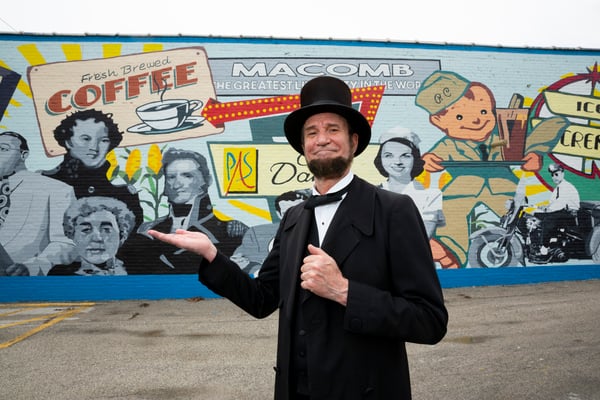
10. Old Dairy Cafe Mural
At nearly 15 feet high and stretching over 60 feet long, stands a whimsy of colorful display on the north side of the Old Dairy Cafe.
WIU Professor of Art, Bill Howard, along with WIU Art Professor Emeritus, Mike Mahoney, created a dazzling montage that pays tribute to both the history of Macomb and the Old Dairy itself.
Along with vintage pop culture images relating to food, diners and dairy products, the mural also features representations of Macomb‘s old water tower and the iconic “EAT” sign from the town’s much beloved and now vanished Maid Rite Cafe in addition to notable natives such as “Big” Al Sears, General Alexander Macomb, Commander Thomas MacDonough and Monopoly inventor Elizabeth “Lizzie” Magie.
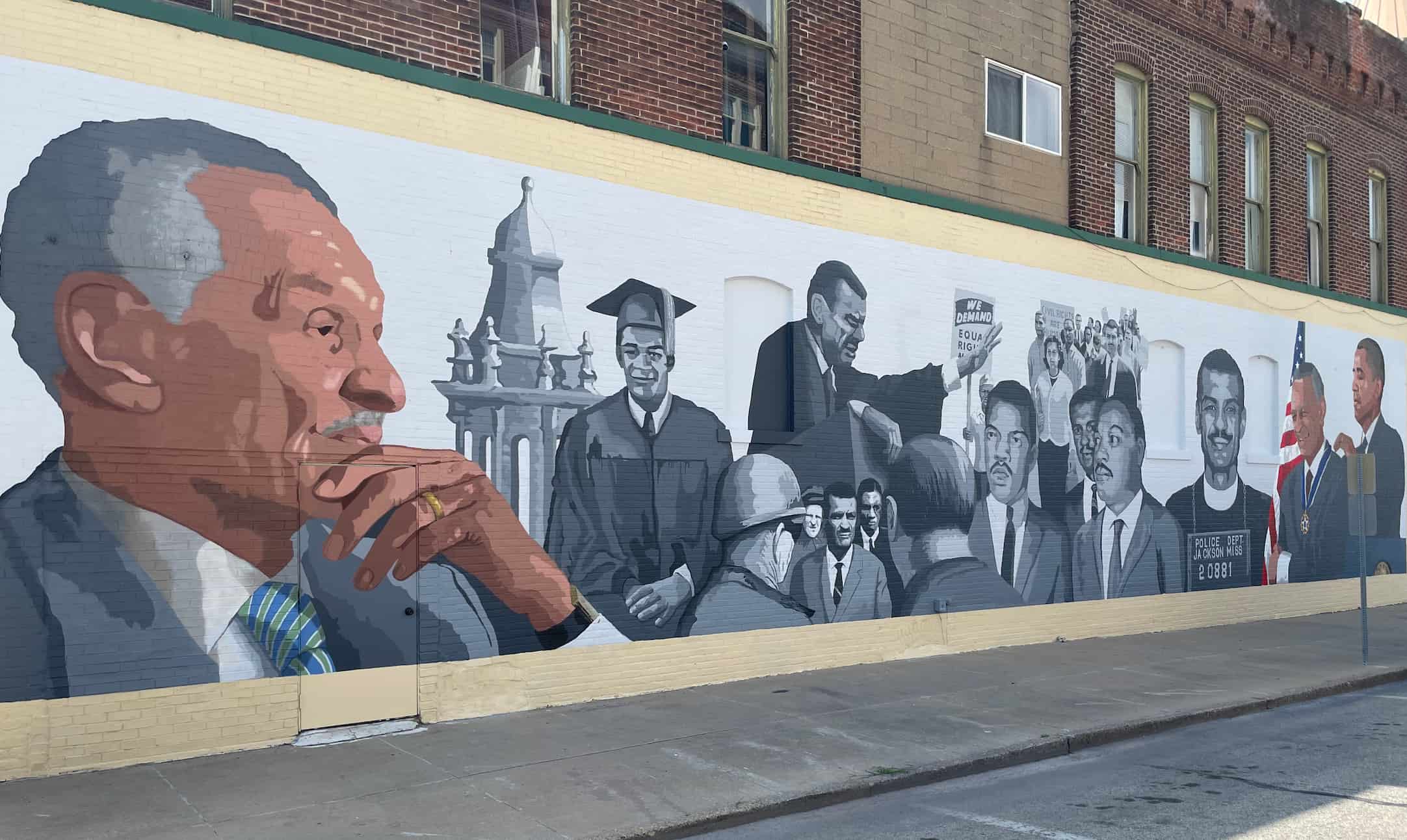
11. Rev. C. T. Vivian: Life of a Servant Leader Mural
In recognition of one of Macomb’s greatest sons, the Macomb Area Convention & Visitors Bureau partnered with C.T. Vivian Project Foundation of Macomb founder and director Byron Oden-Shabazz and artist and former WIU Professor of Art, Michael Mahoney, to honor civil right pioneer Rev. Dr. C. T. Vivian.
At 18 feet high and nearly 75 feet long, Rev. C. T. Vivian: Life of a Servant Leader is McDonough County’s largest mural.
The work, which is displayed on the northern wall of the 135 N Randolph building, depicts Dr. Vivian late in life looking over the course of his storied lifetime from a young man graduating from Macomb High School and Western Illinois University through his varied experiences as a Reverend and leading activist in The Civil Rights Movement.
He worked shoulder to shoulder with Rev. Martin Luther King and lifelong friend Rep. John Lewis to receiving the Presidential Medal of Freedom from Barrack Obama.
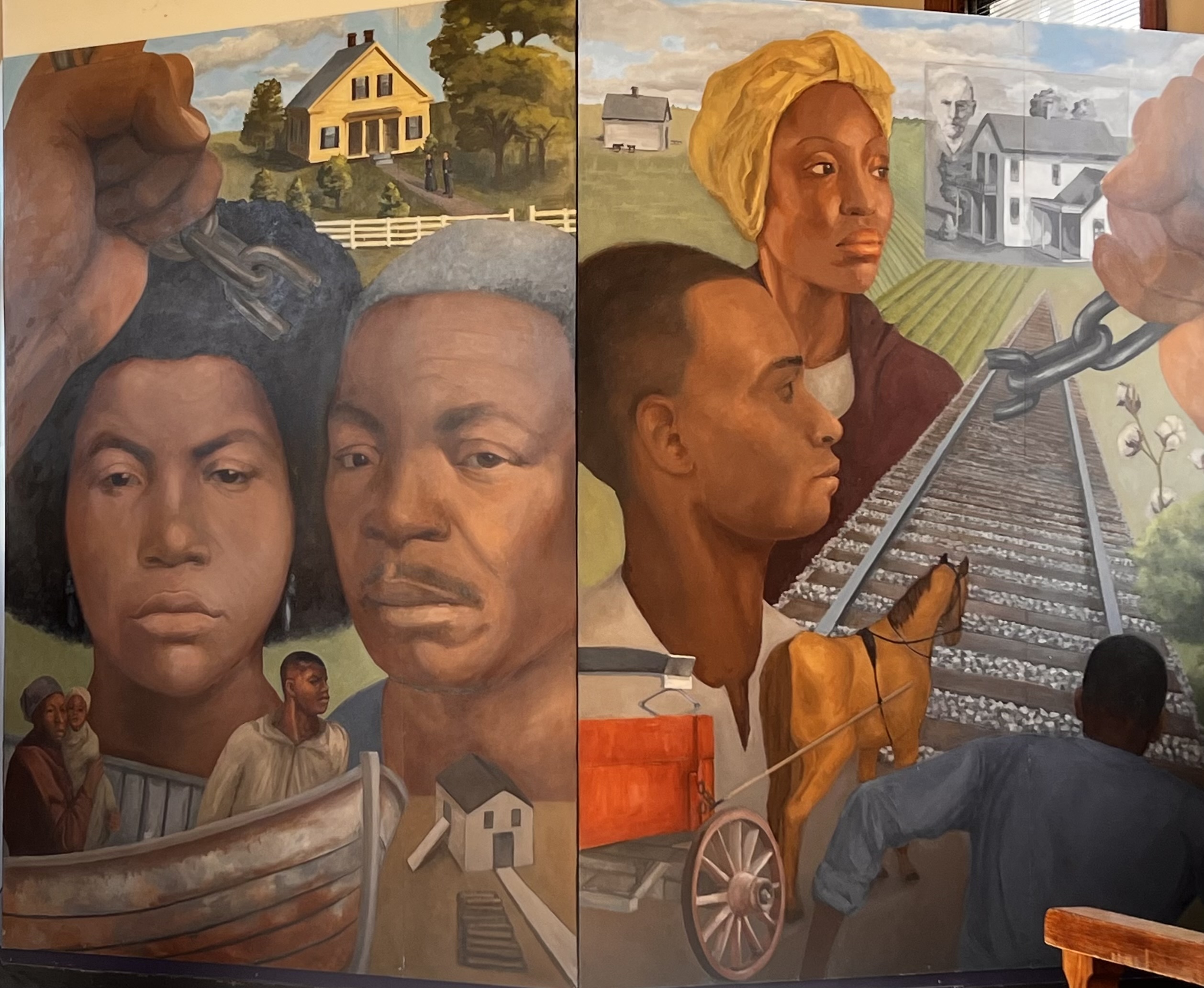
12. Freedom’s Trail: Underground Railroad in McDonough County Mural
A new mural at Macomb Amtrak Station, which was unveiled on November, 7 2025, honors local Underground Railroad history and the bravery of freedom seekers and their supporters in the region. The mural, created by renowned local artist and Western Illinois University Professor Emeritus Michael Mahoney, will honor the stories of freedom seekers who passed through Western Illinois on their way to freedom in Canada.
The mural is painted on large masonite panels and features imagery of local families—such as the Blazers and the Allisons—whose homes served as safe havens for those escaping slavery. The local train station was chosen for the mural because, by the mid-1800s, many freedom seekers stowed away on trains through Macomb, making it a powerful setting to tell this story.
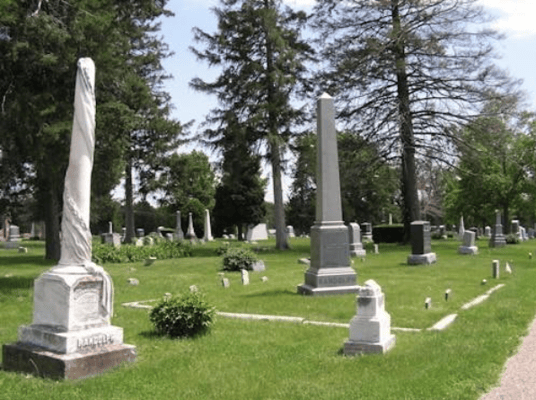
13. Oakwood Cemetery
Created in 1857, Oakwood Cemetery is remarkably historic. Its founder, William H. Randolph, a former sheriff and state legislator, was the leading Abraham Lincoln supporter in McDonough County. And on two occasions Honest Abe stayed at his Macomb hotel, The Randolph House. With 14,000 burials, Oakwood is by far the largest cemetery in McDonough County.
Oakwood was a celebrated burial place for Civil War soldiers. There are over 300 graves of men who served in that nation-redefining war.
Among the many noted graves are those of early county organizers and Macomb founders James Clarke and James Campbell; several Underground Railroad conductors in the Allison and Blazer families; noted business leaders and community activists like C. V. Chandler and Mary Ewing; crusading humanitarians Rose Jolly and Josie Westfall; early bacteriologist Ruth Tunnicliff, who developed the first inoculation for measles; Western Illinois University presidents Alfred Bayliss, Walter P. Morgan, and Dr. Frank Beu; noted Leatherneck coaches Ray “Rock” Hanson and LeRoy “Stix” Morley—to name but a few.
The Oakwood Cemetery is one of 10 sites that gave McDonough County Abraham Lincoln National Heritage Area status and can be visited as part of Macomb‘s Looking For Lincoln Self-Guided Tour.
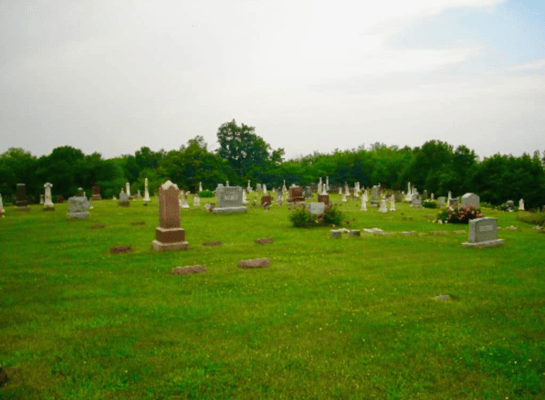
14. Camp Creek Cemetery
Many of the Allison and Blazer families’ graves can also be found in McDonough County's Camp Creek Cemetery, which was established in 1832 (just a few decades before the Underground Railroad reached its peak). Pay a visit to honor these fiercely brave civilians, who put their lives at risk to assist families and individual traveling through the Underground Railroad to freedom.